
Welcome back to my Eastern Front Eyewitness blog, with my apologies for such a long gap between editions. This is because there have been a few things going on that have needed my attention, but they are all positive.
Firstly, I’m pleased to announce that another piece in the jigsaw of the story of the Latvian 15th SS Division in Pomerania and Germany in 1944-45 has been completed.
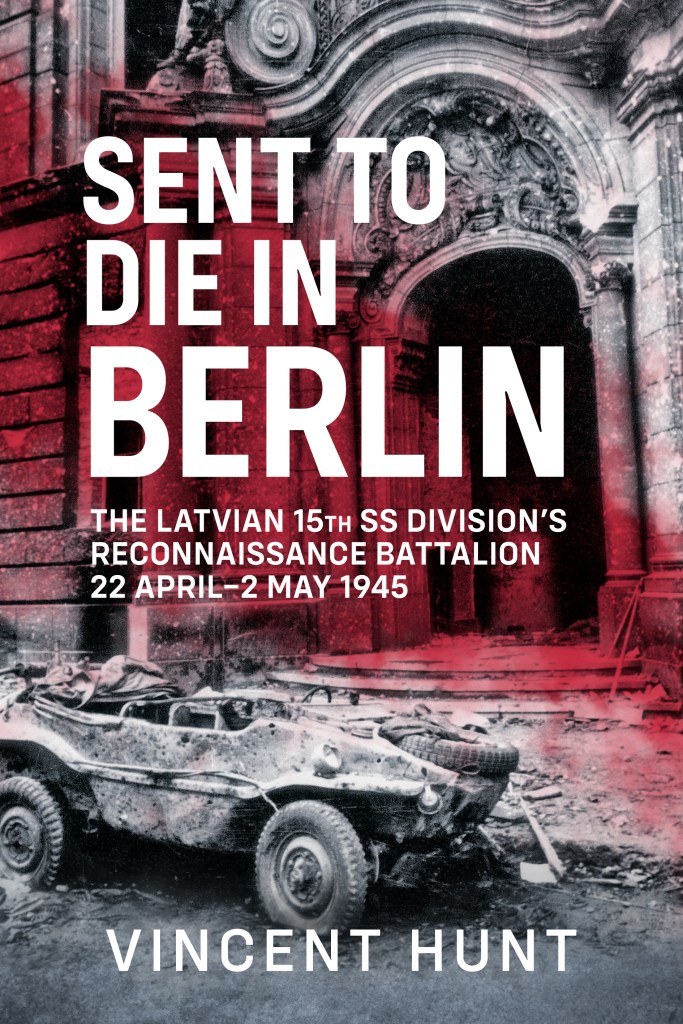
My latest book Sent to Die in Berlin, telling the story of the 300 men of the Reconnaissance Battalion in the final days of the battle for Berlin, has gone to press. It’s a dramatic re-telling of the final days of the battle for Berlin through the eyewitness accounts of Latvian soldiers who survived, translated into English for the first time. It adds a previously-overlooked Latvian perspective to the classic accounts of this final encounter, as the Latvians try to hold back the overwhelming might of the Red Army working their way through the city from the southern Hallesches Tor and Landwehr Canal area.
There are detailed accounts of the battles for Belle-Alliance-Platz, the Anhalter Bahnhof, the Patent Office – where many of the Latvians were killed – and the final fights at Gestapo HQ, the Aviation Ministry and Potsdamer Platz. I walk the streets of Berlin with British guide Matt Robinson (of BerlinExperiences.com) to locate these experiences in the modern city, and discover the base on Jagerstrasse where the Latvians gathered. Plus, using NKVD archives from Riga, the stories of what happened to some of the men who survived can be told.
This has all been possible thanks to the generosity of Latvian military historian Aivars Petersons, who allowed me to translate his interviews with veterans from his book Mums Japarnak (We have to get home). So if you’re interested in the 15th Division or the battle of Berlin, this book adds great detail and also some harrowing insight into what it was like to live through that.
Sent to Die in Berlin will be published by Helion probably in late August or early September – what’s known as ‘the Autumn list’. You can pre-order it here if you’d like to: https://www.helion.co.uk/military-history-books/sent-to-die-in-berlin-the-latvian-15th-ss-divisions-reconnaissance-battalion-22-april-2-may-1945.php
I’m working on setting up some launch dates in various places and will announce dates as they’re fixed. I’d like to register my thanks to publisher Duncan Rogers, editor Rob Griffith, production manager Kim McSweeney and cover artist and cartographer Paul Hayward.
What’s next: I’ve been working on the next instalment of this story, which covers the 5,000 Latvians remaining in Germany in April 1945 – what was left of the 33rd and 34th Regiment, the Anti-Tank Battalion, 2,000 men of the Supply Regiment and around 130 horses for pulling wagons and carts. This book draws heavily on the accounts of the five commanding officers as they realise that the Germans intend to either send them back to Latvia unarmed, where they will fall into the hands of the Red Army and probably end up dead or doing ten years in Siberia, or sacrifice them holding back Soviet tanks crushing what was left of the by-then feeble German resistance.
In the end, the Latvians decide the Germans want to get rid of them one way or another – by sending them back to Courland or by ordering them into ‘suicide positions’ where they will be slaughtered by Russian tanks. After agonising over the decision for several weeks, they decide to mutiny and head west to surrender to the Allies advancing across the Elbe. The book centres around the demarcation lines between American, British and Canadian forces west of Schwerin and Wismar and the Soviets to the east.
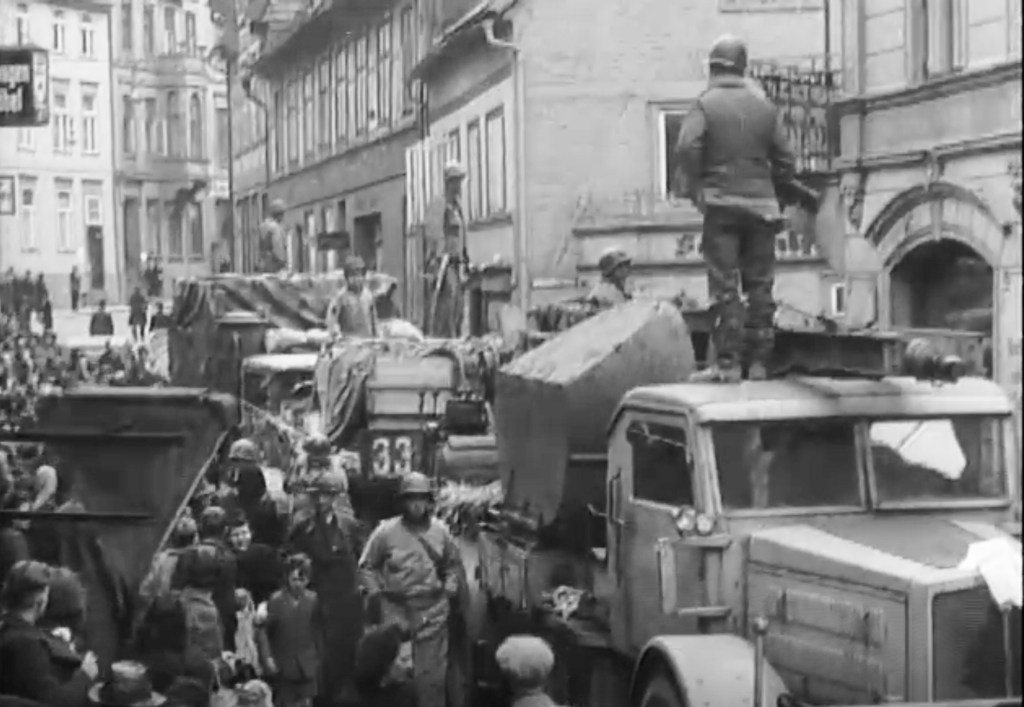
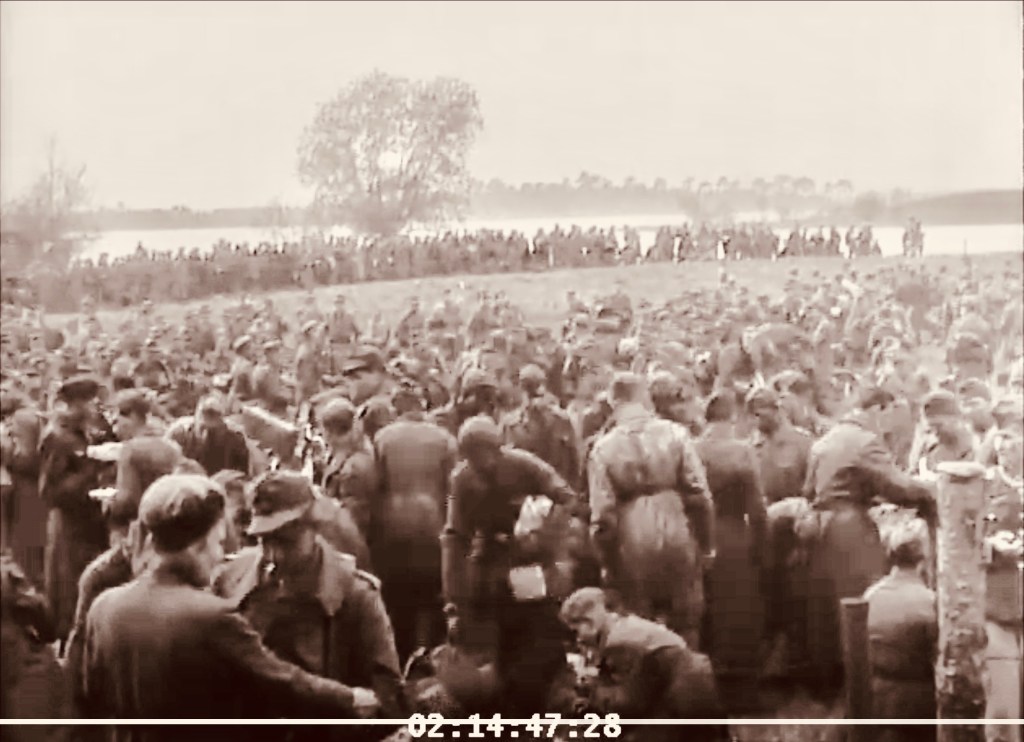
I’ve spent a fair amount of time this year in Poland on a research project based in and around the town of Dziemiany, about 90 kilometres west of Gdansk. This was known in 1944 as Sophienwalde, and thousands of Latvians drafted into the military under German command were sent there to train – before being sent into the frontlines to hold back the Red Army. That period is covered in a little detail in my previous book The Road of Slaughter, but when that was published in Polish, new doors opened and new ideas sprang into life.
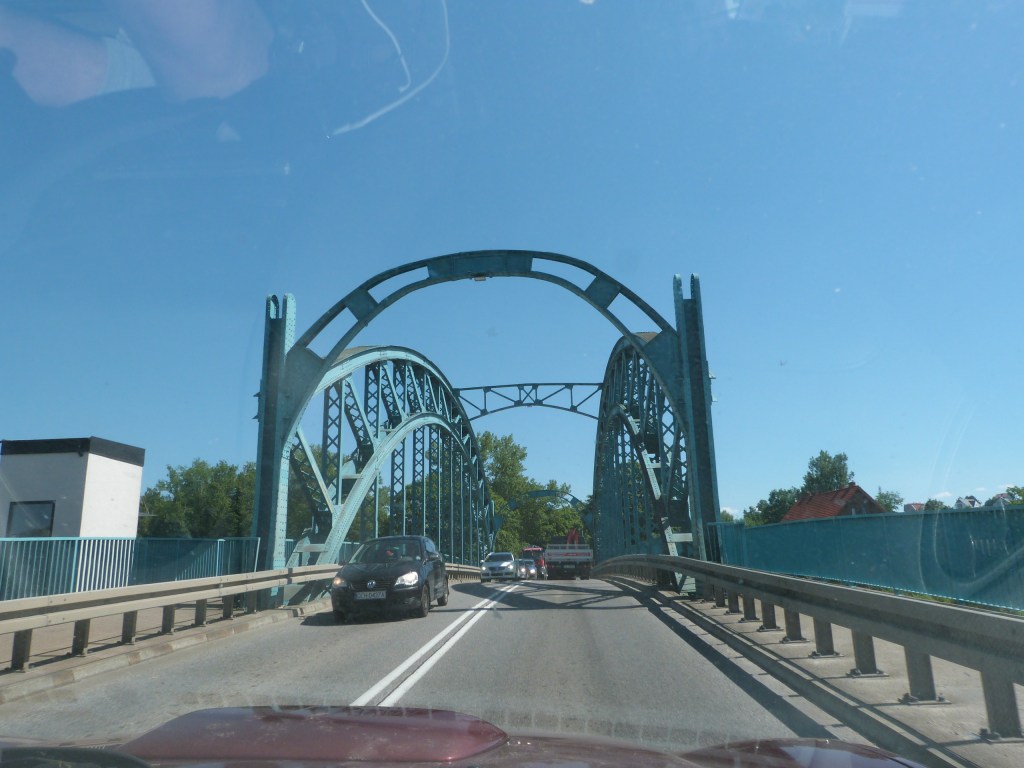
This is the bridge into Bytow, where one of the Latvian regiments was based.
One of these ideas was to bring Polish and Latvian historical researchers together – not necessarily academics, but enthusiasts – to talk to each other about their shared but conflicted history. The idea, worked out in a curry house in Gdansk with Polish treasure-hunter Jan Delingowski and Aivars Sinka of the Latvian Legion veterans’ assistance organisation Daugavas Vanagi – was to create a Polish Latvian historical ‘bridge’ so knowledge could be shared, incidents could be investigated and the fate of some of the Latvians who didn’t return home could be explored. We have found plenty to look into, and we’re starting with our first summer camp for younger researchers later this month.
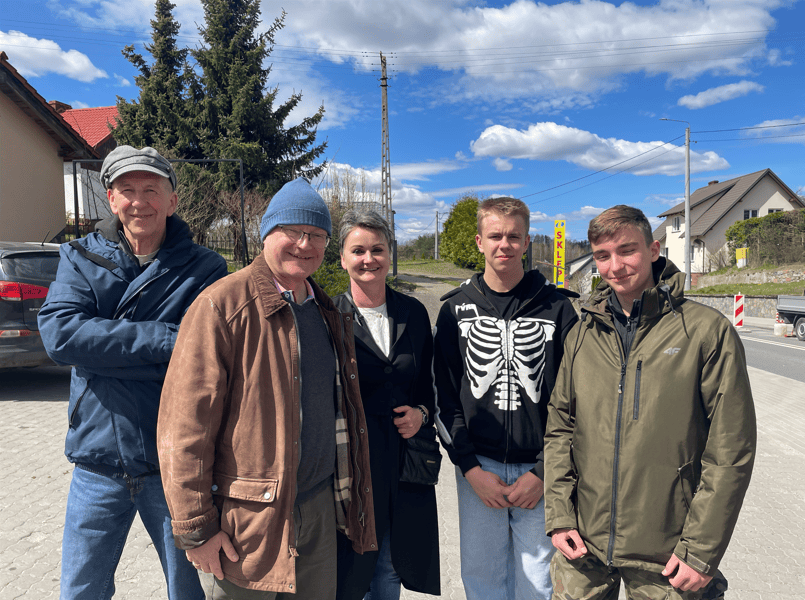
An early formation of the Polish-Latvian historical bridge. From left, Wiktor Schroeder (POL) Aivars Sinka (LV) Monika Daniels (POL) and Timothies 1 and 2 (POL). Photo by me (GB).
We’ll bring together a group of Latvian and Polish historical researchers for the first time, with top Latvian historian Viesturs Radovics and Polish officials from the local villages. Our focus will be on looking at what was happening in 1944 in the SS training camp in West Prussia, known as the SS-Truppenubungsplatz Westpreussen. There were Latvian units based in the villages in the area, some of which had been forcibly cleared of the local population. We’re looking at which Latvian units were where, what they were doing and how the German military network linked up. I’ll post some news from the camp in subsequent editions of this blog.
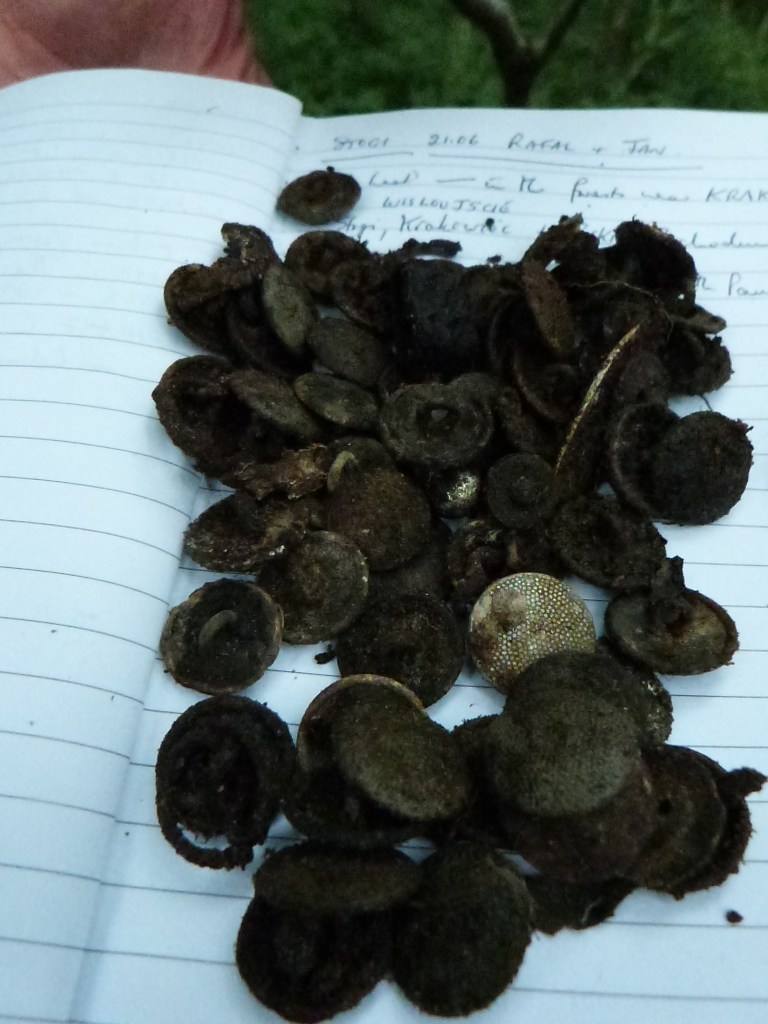
There are still sites in Poland from the Second World War that haven’t been properly documented and explained yet – this is a collection of buttons from tunics of men killed in an area near the coast of Gdansk.
But we have experts working with us with incredible knowledge and the memories of the elder citizens are staggering to hear. As a journalist working with history, I think it’s important we get their voices on the record for future generations – men like Alosh, seen here after talking to us.
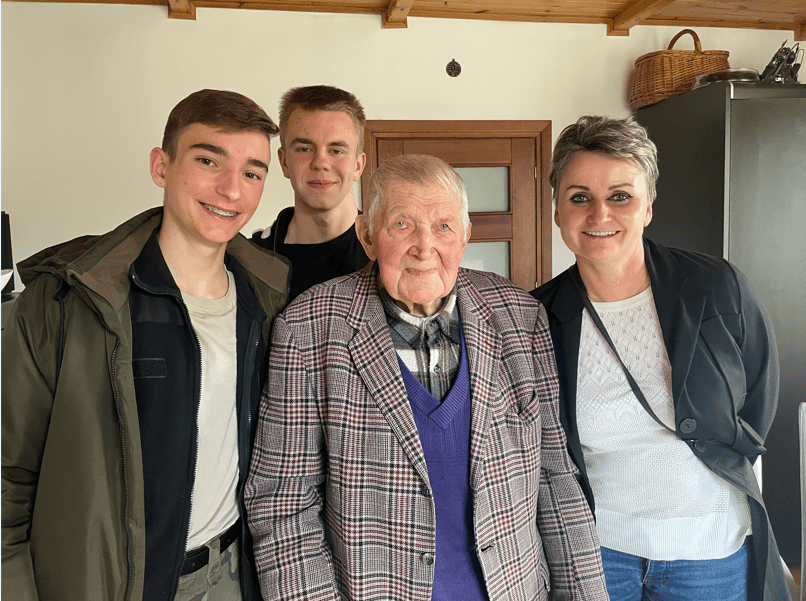
Alosh was a child during the war and his memories add small but important details about the Polish way of life that was shattered between 1939 and 1945, and afterwards…
Onto projects in the recent past, and last year I went to Liepaja in western Latvia for the unveiling of a plaque to remember the incredible achievements of an Austrian Jewish football coach called Otto Fischer. A former Austrian international from the heyday of Austrian football – the ‘Wunderteam’ – Fischer’s career was ended by injury so he turned to coaching. He was recommended to take the job with Olimpija Liepaja as there was a well-trodden path of Austrian coaches going there – but he hit the jackpot. He took a team of local men, insisted they play the ball on the ground at a time when football was more ‘kick and rush’ – and won the Latvian league three times in a row. You can read more about his tactics here: https://www.vincenthunt.co.uk/the-barcelona-of-the-baltics.html
Then, tragically the Nazis invaded. Fischer was rounded up despite having the correct documents to work and is thought to have been shot between August and November 1941. The driving force behind the memorial was Ilana Ivanova of the Liepaja Jewish Heritage Foundation, a tireless human dynamo who organised all the local football federations to stage a competition for the first Otto Fischer Cup and produced a booklet about it, including bringing Austrian diplomats and Fischer’s nephew to the occasion.
My colleague in journalism, Alexander Welcher, was there too, and has published a piece about Otto Fischer pegged to the World Cup, which you can read here: https://eng.lsm.lv/article/features/features/11.07.2026-otto-fischer-legendary-football-trainer-of-the-barcelona-of-the-baltics.a654712/
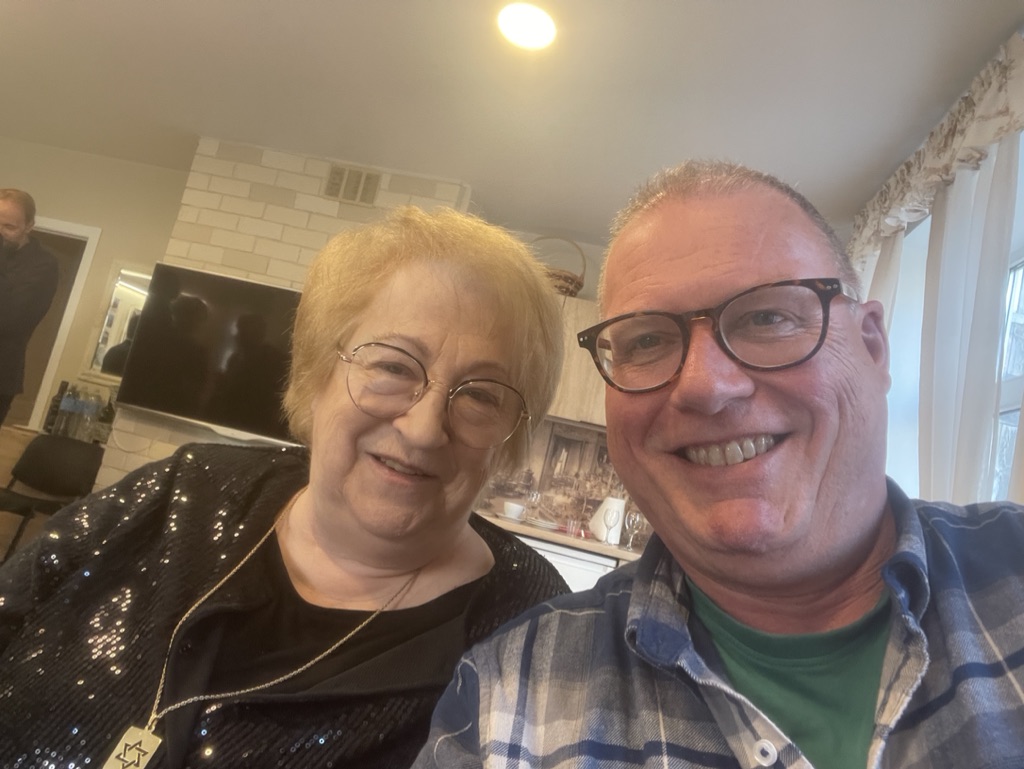
I’d like to close by sending my best wishes to Ilana Ivanova, who celebrates her 80th birthday in October. Ilana was one of the people who helped me a lot writing about the fate of the Jewish population of Liepaja in my first book about Latvia during the Second World War, Blood in the Forest – the end of the Second World War in the Courland Pocket (Helion, 2017). She is a font of knowledge and I consider myself very lucky to call her a friend. Happy birthday, Ilana!
 Eastern Front Eyewitness