
This moment is probably the right time to add a little context as to why I’m meeting WWII gun dealers and lowering myself into underground bunkers in the middle of forests in eastern Poland.
I’m taking – with a growing team of people – the first steps in what we’re calling ‘the Polish-Latvian historical bridge’. This is a coming-together of military enthusiasts, historians, collectors and history activists from both countries – plus a passing journalist from Manchester – to see if we can build a grassroots picture of what was happening on the ground in the villages of Kashubia west of Gdansk between 1944 and 1945.
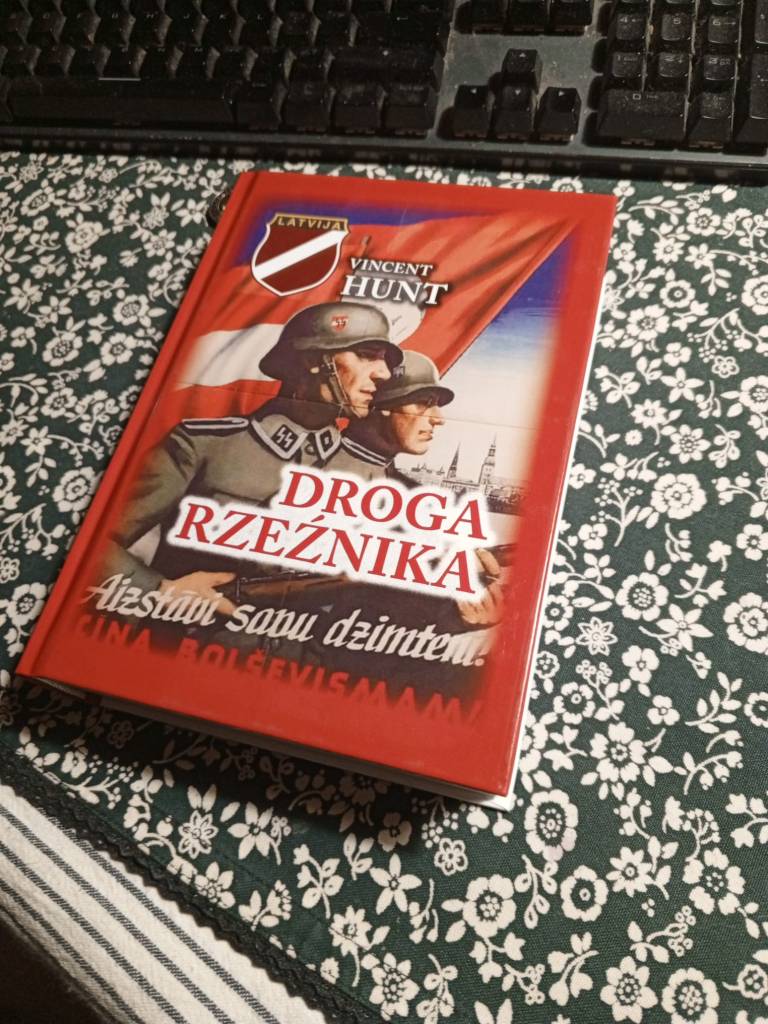
I’ve found myself way deeper in the story of the Latvian 15th Division in Pomerania and Germany in WWII than I ever expected. It took me six years to fully understand their journey and get to the end of it – and then there were four different endings. I decided that a sensible first episode was what happened in Pomerania, which became The Road of Slaughter. When that was published in Polish last year by Finna as Droga Rzeźnika, my email began to ping.
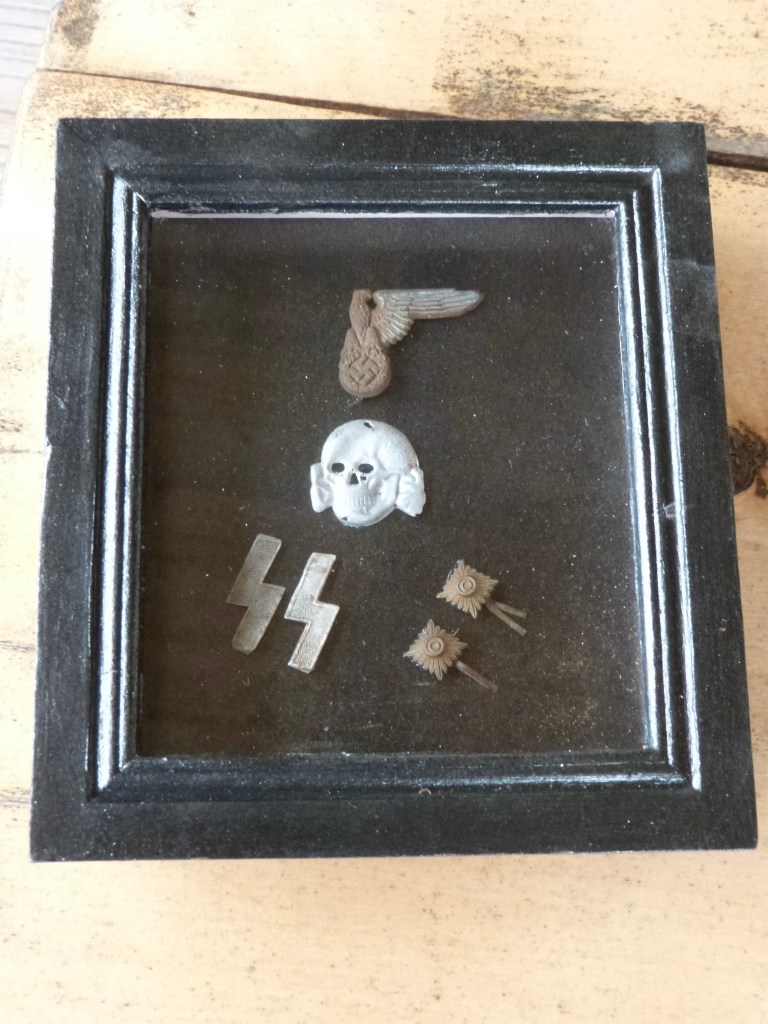
I was told that Poles wanted to tell their stories about the Latvians in the villages of the SS-Truppenubungsplatz Westpreussen, an SS training ground built in West Prussia from 1943 onwards, centred on the towns now called Chojnice, Dziemiany, Koscierzyna and Bytow. There was memorabilia to see: Latvian arm flashes, cap badges, SS collar runes, and stories to tell about Latvian soldiers who fell in the fields and forests of Kashubia and were remembered by locals who still laid flowers at their graves.
It was the fallen soldiers that made me think this was not a journey I could make on my own, so I picked up the phone to long-term collaborator and Legion researcher Aivars Sinka, the chairman of the veterans’ association Daugavas Vanagi. If there were fallen Latvians still in Pomerania, he needed to know about that to add to his records and to inform the Foreign Office in Riga. Who were these men? Could they be identified? Should they – could they – be brought back home?
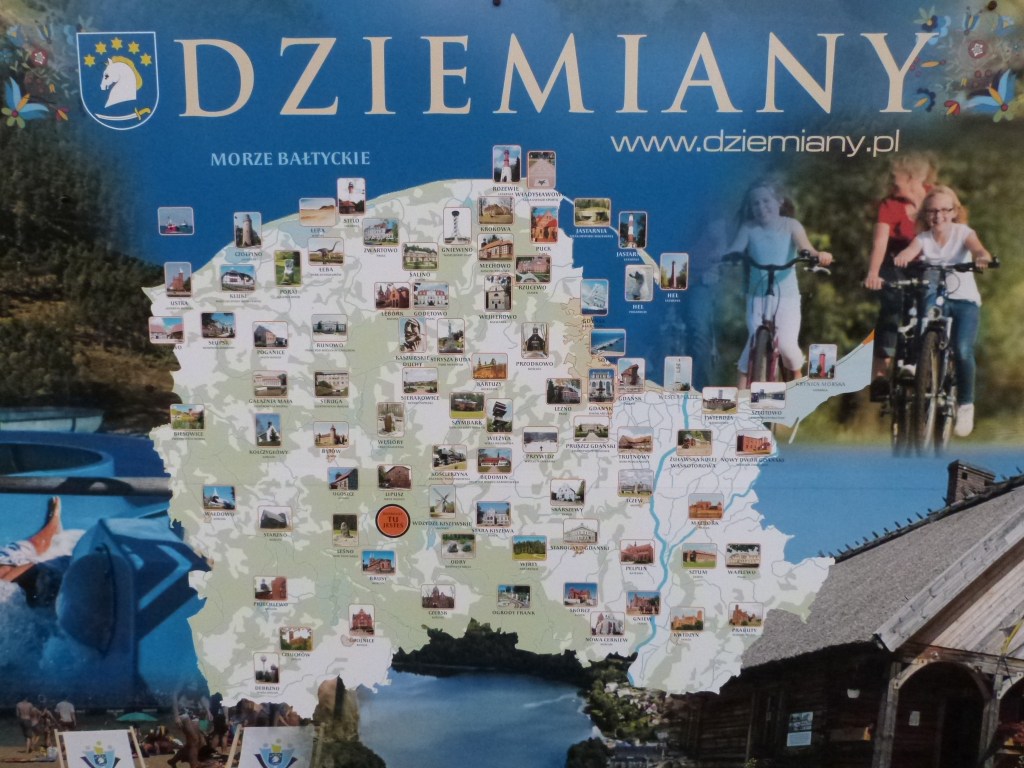
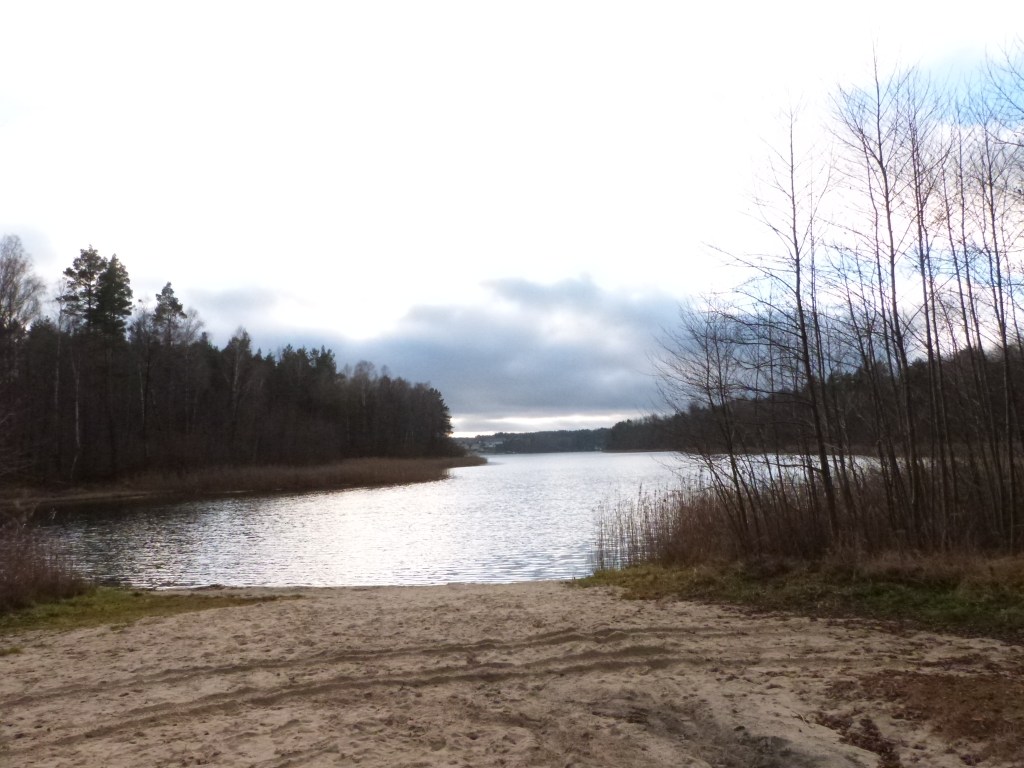
We made an initial trip to Gdansk in October 2025 to meet Jan Delingowski, bunker expert and treasure hunter, who would be our gateway to the people with this knowledge. An hour’s drive took us to Sophienwalde [now Dziemiany], which had been one of the centres for the Latvians in the training ground. Our first stop was at a nearby lake, where Jan showed us the remains of the Latvian barracks complex they’d built by the shore.
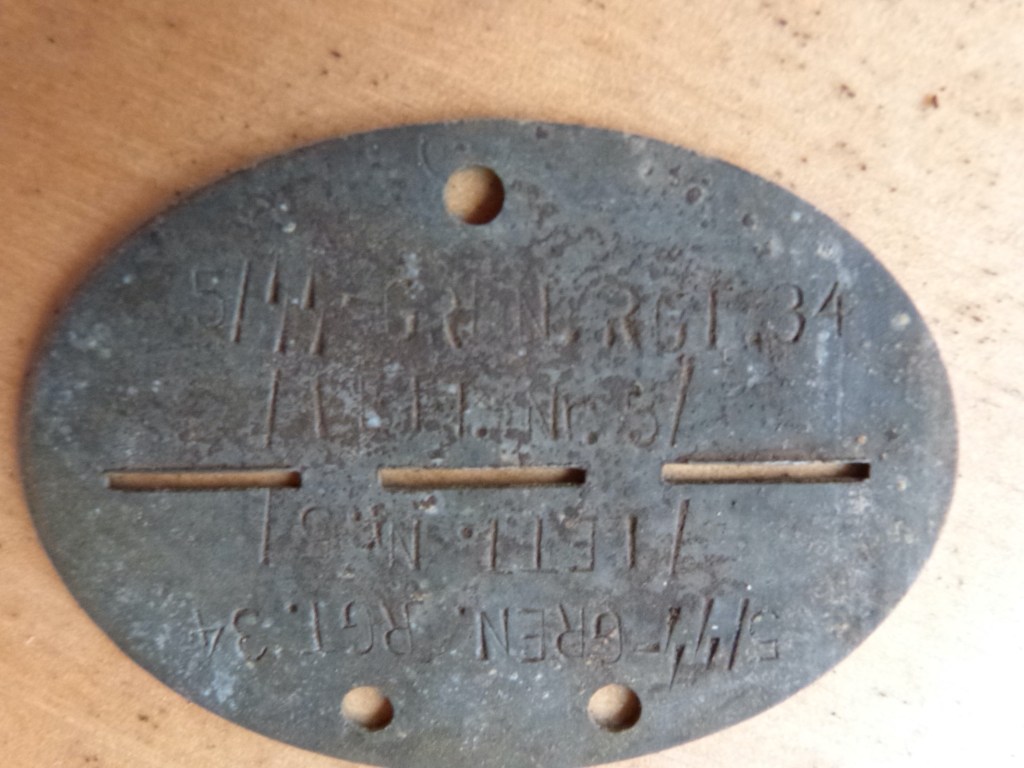
Then we met history activists and local researchers from the village to see the artefacts the Latvians left behind – such as dogtags. This one is from the 5th Company of the 34th Regiment of the 15th Division and is stamped both ‘SS’ and ‘Lett’– short for their official designation as 15. Waffen-Grenadier-Division der SS (lettische Nr. 1).
There were Latvian red-white-red armflashes, SS runes, rings and the Death’s Head SS cap badge the Latvians wore until it was replaced late in Winter 1944 by the pre-war Latvian Army rising sun.
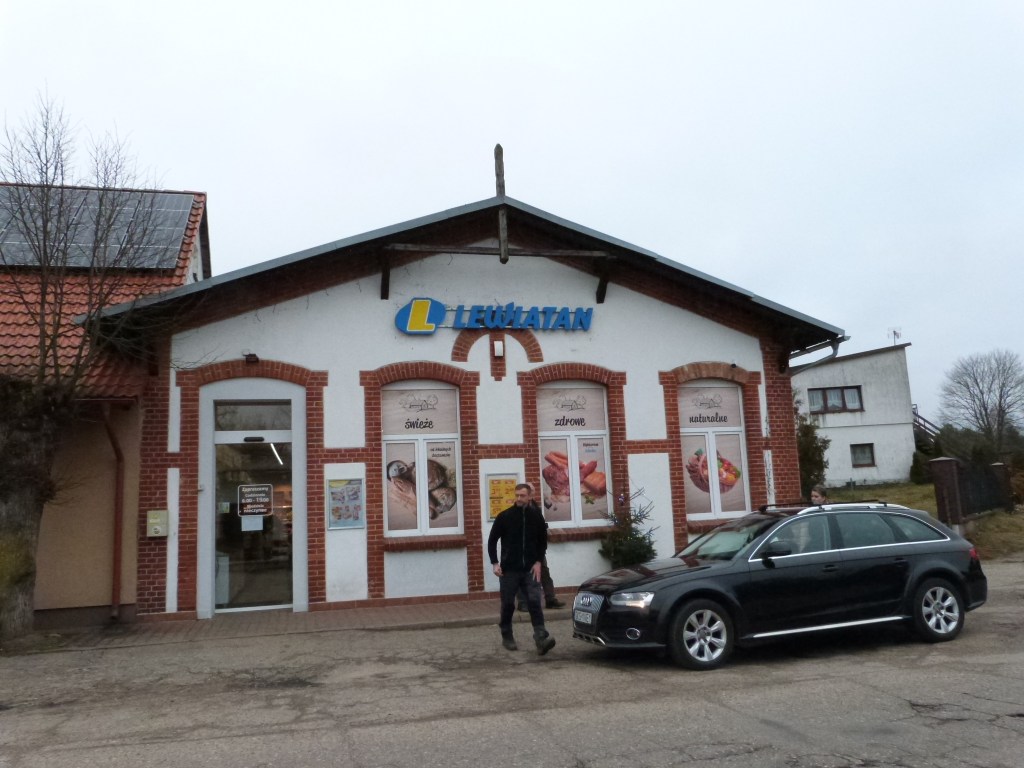
We jumped in Jan’s car and drove to a shop in one of the villages nearby – once a pub – to see graffiti scratched into the brick windowsill by Latvian soldiers in 1944. This was just one example to be found in the area: there were Latvian names scratched into a statue of Mother Mary by a local lake, some graffiti in a barn where soldiers had bunked up with the animals and a collection of telltale traces of a Latvian presence, such as a one Lat coin.
Our next stop was at another shop, this time in Dziemiany, which had a more complex story. Just across the road from the Catholic church once visited by Polish Pope John Paul II, this land had been the cemetery. Jewish forced labourers, mostly women, had been buried at the rear of the plot, where the shop now stands, while the front area – used as a car park – apparently contained the bodies of Latvian soldiers who died here during the training period 1944–45.
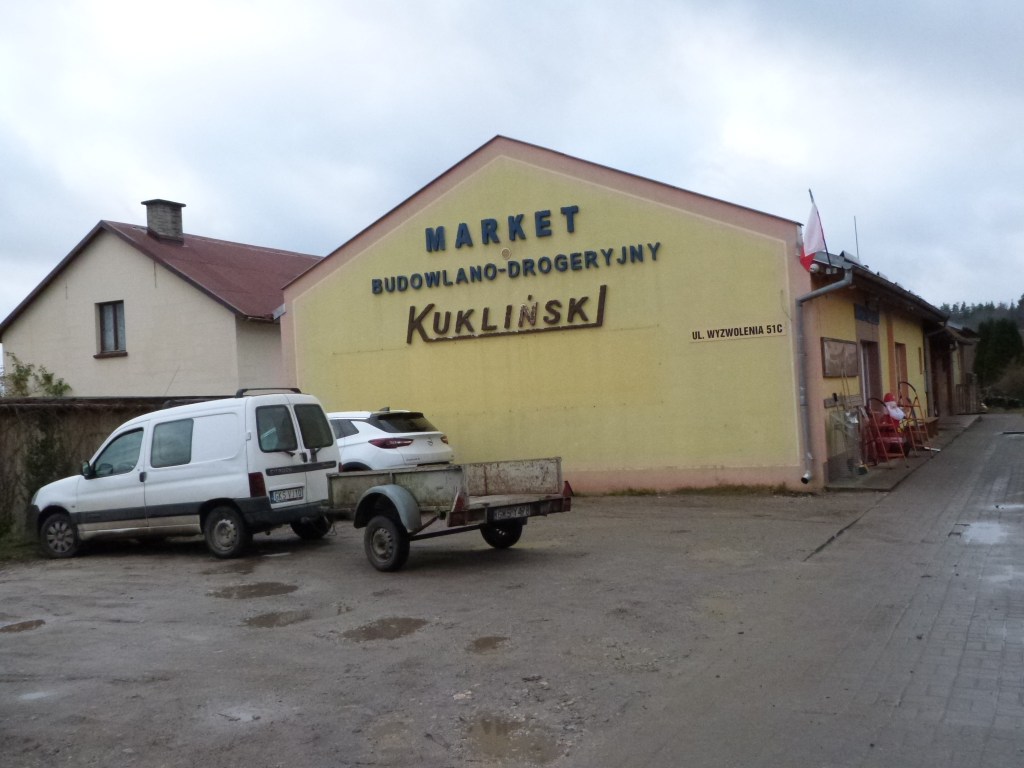
The owner Krzysztof wants to concrete over it to improve the surface – but what about the bodies of the fallen men? This was a job for Aivars. Could we locate their bodies, and could they – should they – be exhumed? If so, who would give permission, and where would the bodies go once exhumed? Surely they should be repatriated to Latvia? But were there agreements in place to allow this to happen? And who were these men anyway? Did anyone know? So many questions…
Physically extracting their remains was the least of the problem. Jan had ground-penetrating radar and diggers; Krzysztof was happy for it to be done. But it had to be done properly. Aivars clearly had some calls to make.
Jan told us that there were still people alive, though very old – 92, 96, 97 – who were happy to share their memories of that time. In fact, one man called Stanisław Tiborski, was free this afternoon. So off we went, to be met by translator Joanna Turzynska. In 1939, then aged five, Stanisław had lived in a house just by the border between Poland and Germany. He took us to the cross marking the spot, and promptly launched into an eyewitness account of the Nazi invasion.
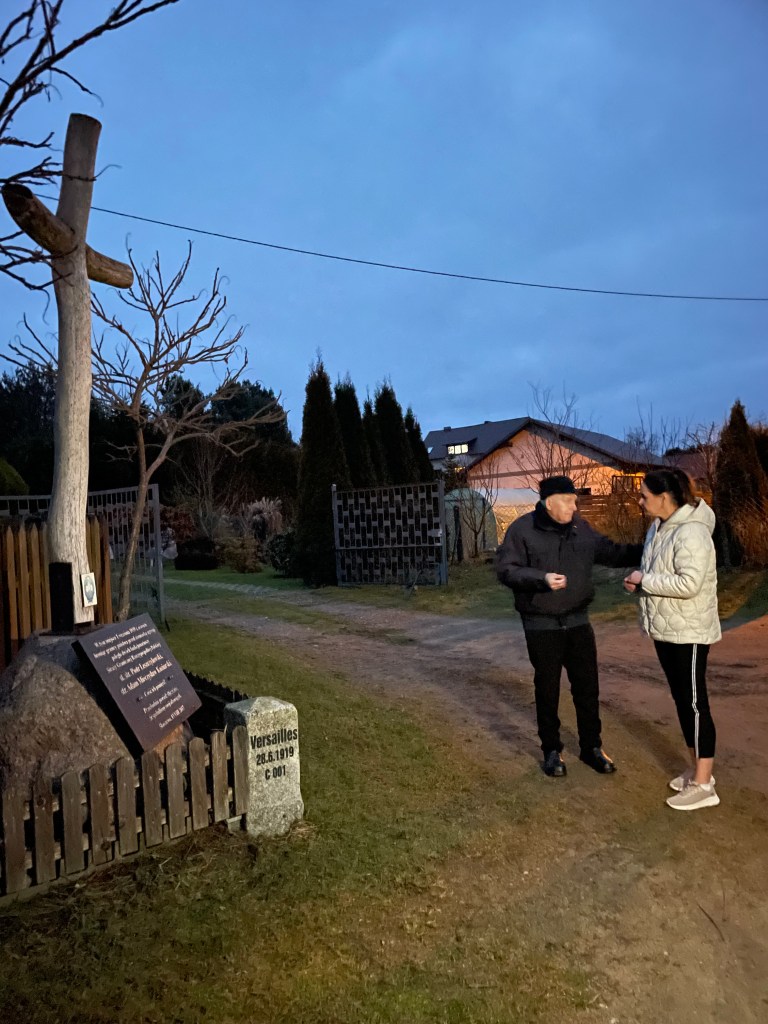
“When the Germans came, soldiers told us to evacuate the house. They came in with their guns swinging over our heads. The children started to cry. We were there just with our mother and we were sticking to her, as the other men had been taken away before.
“We evacuated the house and walked through the schoolyard, and there was a [Polish] soldier on the steps covered in blood, leaning on a gun, dying. When they stopped shooting two German soldiers grabbed the man – he was still alive – took him to the house of the Pelinski family and laid him in the bed. He was covered in blood. One of the German soldiers wanted to bandage his hand and give him some water, but he refused to accept the help.
“Only Mrs Pelinski could help him – he didn’t want help from the Germans. Then some people from Skoszewo came with a horse carriage and took him to hospital, first in Sominy, then to Bytow, where he died. He was a guard at the border where the training camp started. The Germans checked everything, but in the evening they allowed us to come back.”
By now my jaw has dropped. An eyewitness account of the German invasion of Poland – nearly 100 years later? For someone who spent decades gathering oral history accounts for documentaries like the BBC Radio Ballads, this was absolute gold dust. But there was more.
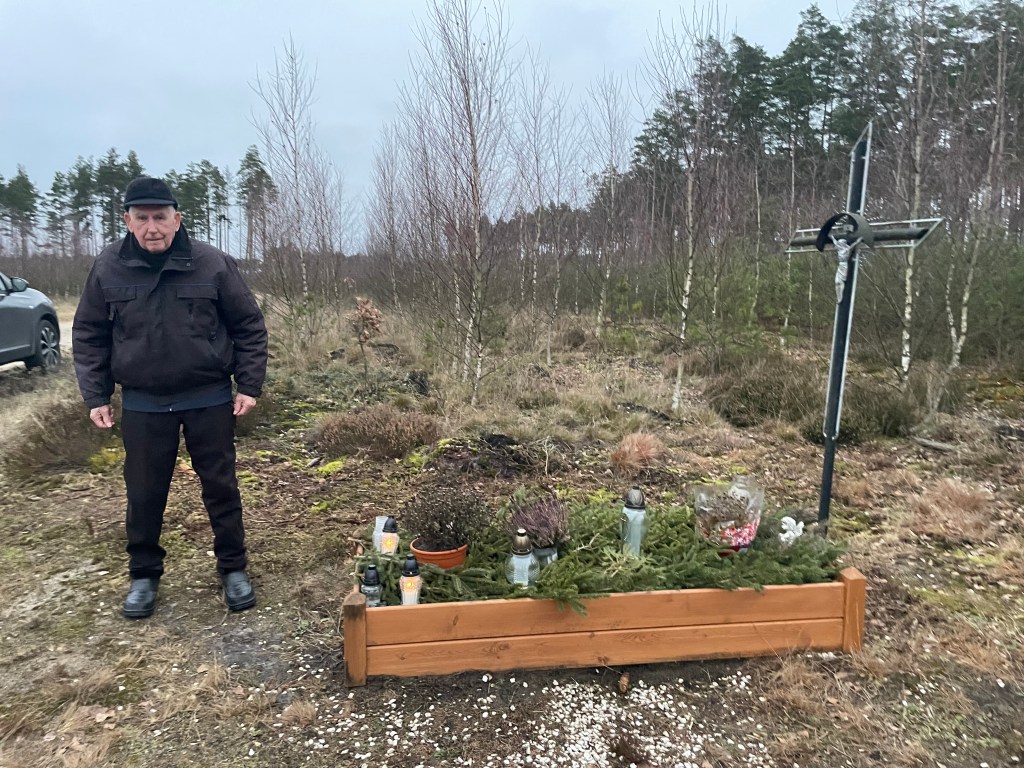
Stanisław takes us into the forest to show us the grave of a Latvian soldier killed in a Soviet air attack which he has tended for the past eight decades. He lights a candle in remembrance. The man’s body lay here for a decade after the war but was removed by Polish authorities and taken to Chojnice in 1956. He could be identified from the number on the dogtag he was wearing around his neck, so Aivars makes a note of it and writes to the Deutsche Volksbund [known as the DVB], a German organisation which gathers the bodies of the unrecovered fallen from battlefields.
Aivars looks on, impressed. “It’s fantastic and very touching that Stanisław and others still put flowers and candles on the grave,” he says. “It would be great to find the man’s family and let them know what happened to him”.
The trouble is, because the Latvians were part of the German military, they are counted as Germans. And they don’t go home, they go to a military cemetery just outside Szczecin. Worst of all, the Latvian authorities aren’t told when this happens. [NB: Five months after Aivars wrote to the DVB about this man, there has yet to be a response].
Back at his house, furnished with cups of tea, Stanisław shares some more memories. Yes, he had known the Latvians, he says, because in 1944 when they arrived they were billeted in his house and set up a field kitchen in the garden. Then aged 10 and with seven brothers and sisters, the Latvians gave them food and used their downstairs room as a command centre during live fire exercises, when the children had to stay inside as shells flew overhead.
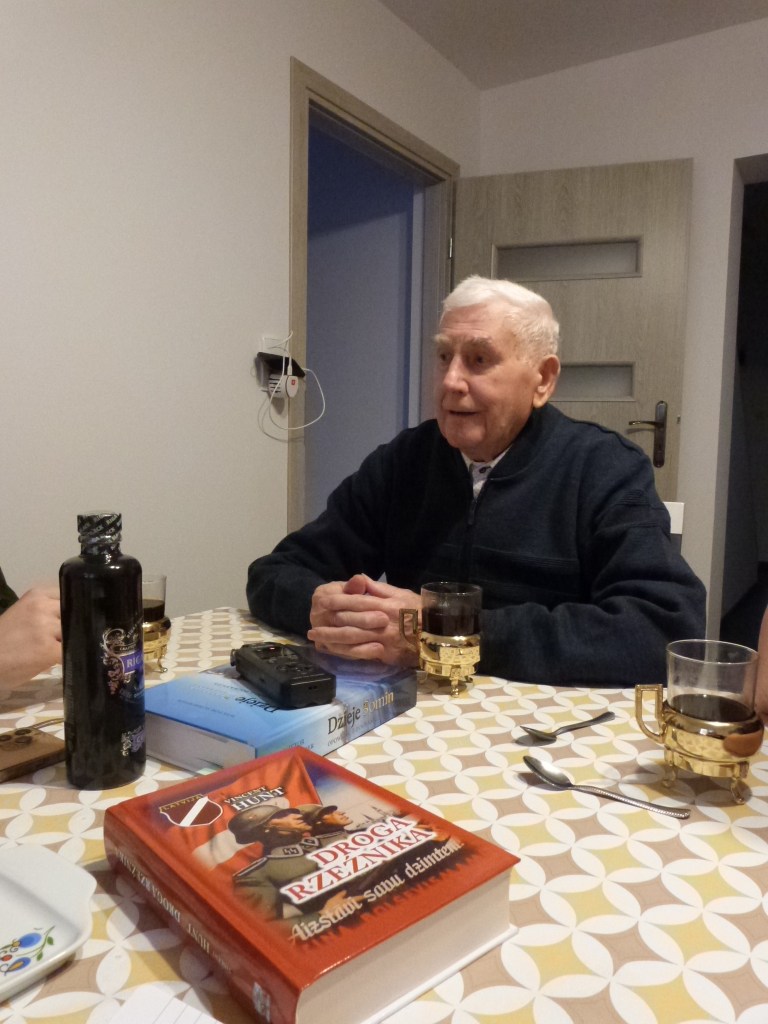
The soldiers grew fond of little Stanisław and taught him songs. Incredibly, he starts singing one of them. When he finishes, there is a stunned silence. Everyone looks at Aivars. “What’s the song? What’s the song!”
I recognise the melody. I heard it many years ago walking through the park by the Freedom Monument in Riga as an accordionist played Legionnaires’ songs on one of the bridges leading into the Old Town – but I can’t name it. Aivars is scrolling through his phone, suddenly under pressure. “Got it!” he says.
The song is Zilais lakatiņš [The Blue Headscarf], a wartime song popular with Legionnaires telling the story of a man whose true love wears a blue scarf. Stanisław learned the words phonetically from the soldiers and sang along with them. He doesn’t know what the words mean and he doesn’t know the whole song, but he remembers the chorus. Now – incredibly, 85 years later – he sings it along with Aivars.
Atmiņā lakatiņš zilais
Mati kā saulstaru riets
Biji man viena, nakts Tu vai diena
Mīlas viskrāšņākais zieds
I remember the blue headscarf
Your hair like sunset
You were the only one for me, night or day
Love’s most beautiful flower
Zilais lakatiņš was written by Riga-born Eduards Rozenštrauhs in 1942, a musician and composer who served in the Latvian Army, Red Army and German Army during the war. He returned to Soviet Latvia after several years as a prisoner in Siberia and the song is still popular today.
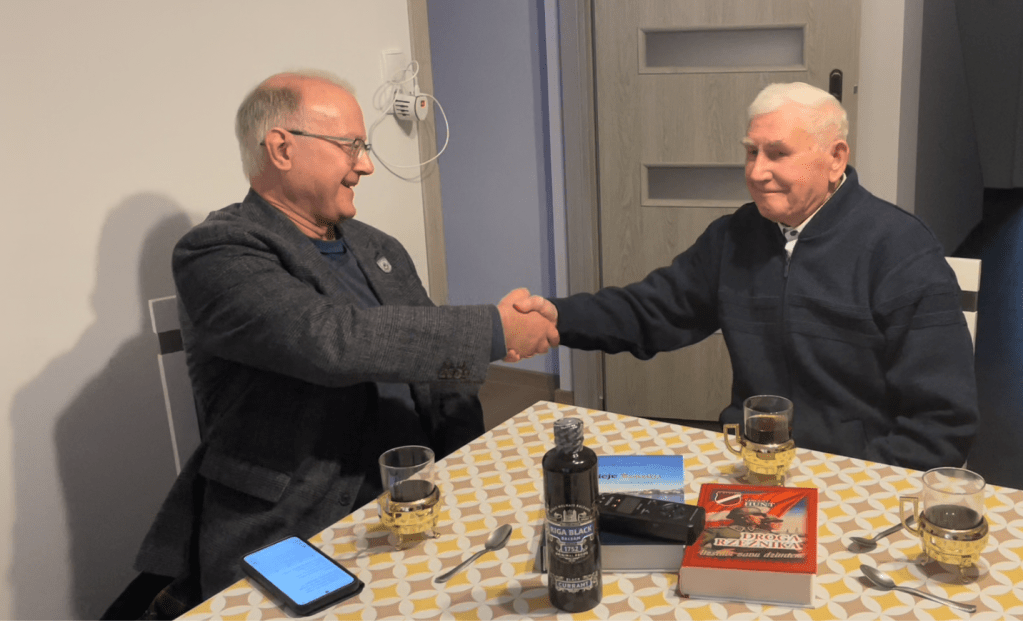
Wow. For a first serving of what may lie ahead in Kashubia, this is a powerful moment, and one we captured on video for the potential museum our partnership might produce.
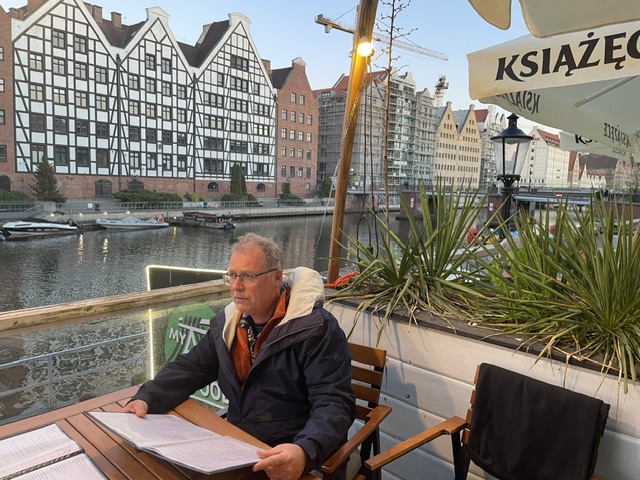
As our time in Poland came to an end, Aivars, Jan and I retired to a restaurant to consider the way forward. I’d taken a break from my job as a lecturer in journalism in Manchester to finish writing about the Latvian 15th Division in Pomerania and Germany, and one of the books I had planned covered the Siege of Danzig in March 1945. So this was an opportunity to work on that, yet here I was back at the start of the story.
But eyewitnesses don’t last forever, and the idea of capturing those stories for future generations appealed to me as an oral historian. After all, talking to the Latvian veterans in the UK who had been in the war in Pomerania was what got me started on this journey.
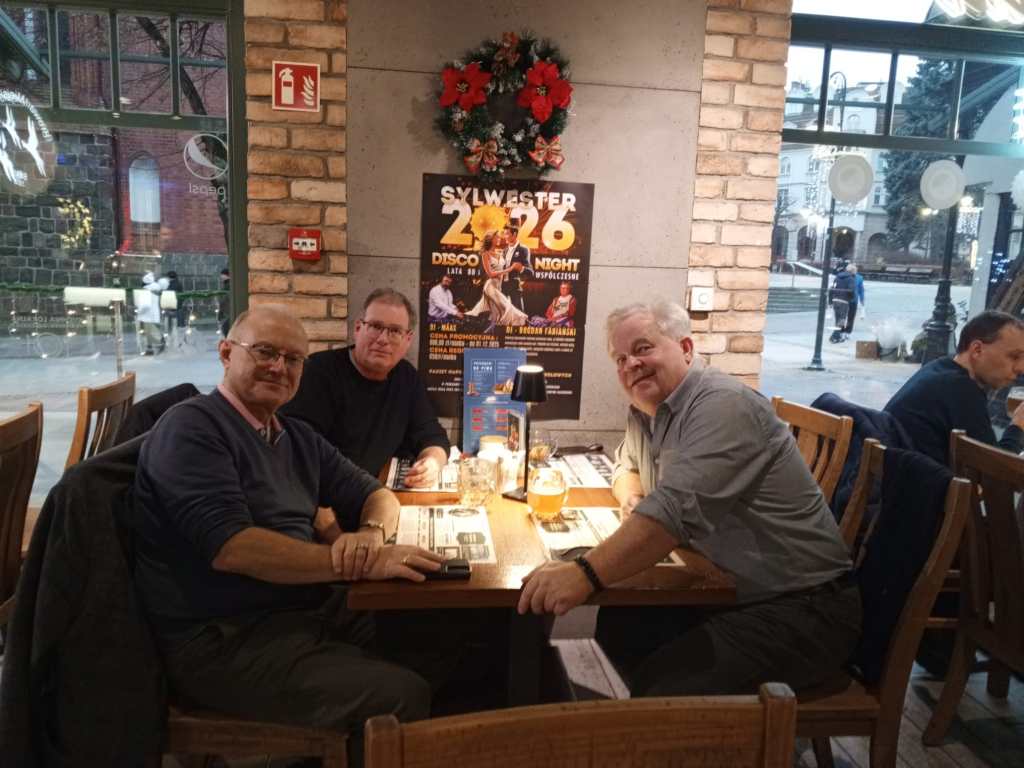
Jan could open the door to fresh eyewitness accounts, local expert knowledge, access to Polish history, Polish experiences, Polish perspectives – the stuff I could never reach as a non-Polish speaker and outsider. Aivars was an expert in combing through the Latvian archives and finding unit diaries, personal memories in letters to Latvian diaspora newspapers after the war, photographs of the soldiers on location and his many years of painstaking research had led to The Road of Slaughter in its present form. As an opportunity to revisit history, this had the lot.
For me it was an ideal combination of the elements of the technique I’d mapped out in my PhD formulating a way of writing about the past from a ‘now’ perspective that I called ‘Historical Discovery Journalism’ – lifting the lid on the ‘accepted’ history by going back to the places where it happened, talking to local experts, looking for eyewitnesses, digging out more stories, seeing how those times were remembered today and what remained: all with a view to ‘adding to the knowledge’.
I knew it worked – I’d developed that method in the writing of my six books so far, and my wise supervisor Geoff Walton would surely be proud of this application of theory to practice.
All three of us recognised that there was valuable work we could do and a contribution each could make. I could use my experience as a multimedia journalist to preserve these memories for future generations. Aivars could bring the Latvian side. The historical activists in Kashubia wanted to set up a museum about what happened in their region, so that combination would work well with photographs and stories from then and now from both the Polish and the Latvian sides. We could build a panoramic and very personal multimedia history!
And apparently there were youngsters keen on preserving this history too, so we could pass on our knowledge of research, interviewing and sourcing to help train them.
What a legacy that would be – while also seeing a beautiful part of Poland and enjoying the occasional glass of Primitivo red wine … so I was in. So was Aivars. Jan was delighted. “I will set it up,” he said.
To be continued…
•The author would like to thank all the people who have created this Polish-Latvian historical bridge and made this research project possible. They include Jan Delingowski, Aivars Sinka, Monika and Gregorz Daniels, Viktor Schroeder, Stanisław Tiborski, Joanna Turzynka, Łukasz and Monika Salata, Janek Baranowski and Piotr Czerupuk. The translation of The Road of Slaughter into Polish was by Jacek Cielecki and published by Andrzej Ryba of Finna.
 Eastern Front Eyewitness
Bittersweet all of it! My dad may have been with this 10 year old now a gentleman in Poland and we as diaspora children of these soldiers also sing this zilais lakatiņš throughout our growing up years here in America …
LikeLike