
It was a nice sunny afternoon in Poland, not too busy, with clear skies and a slight breeze, gusting a little at times but overall not too bad. A phone rang.
Bunker expert Jan Delingowski said: “Darek will show you his collection. Get in the car.”
Darek is a dealer in arms and ammunition, specialising in WWII weapons. He operates in a part of Poland that was used as an SS training ground from 1943 onwards as Germany shipped thousands of Latvian conscripts here and attempted to turn them into soldiers.
Their diaries are a little pitiful. “No training today. No ammunition, no fuel for transport. Training could not be completed.”
“There is only one gun. Squads take turns firing but training could not be completed.”
I am in Poland finding out more about these inexperienced, naïve conscripts training to face Red Army soldiers who have fought their way from Stalingrad across the Vistula river.
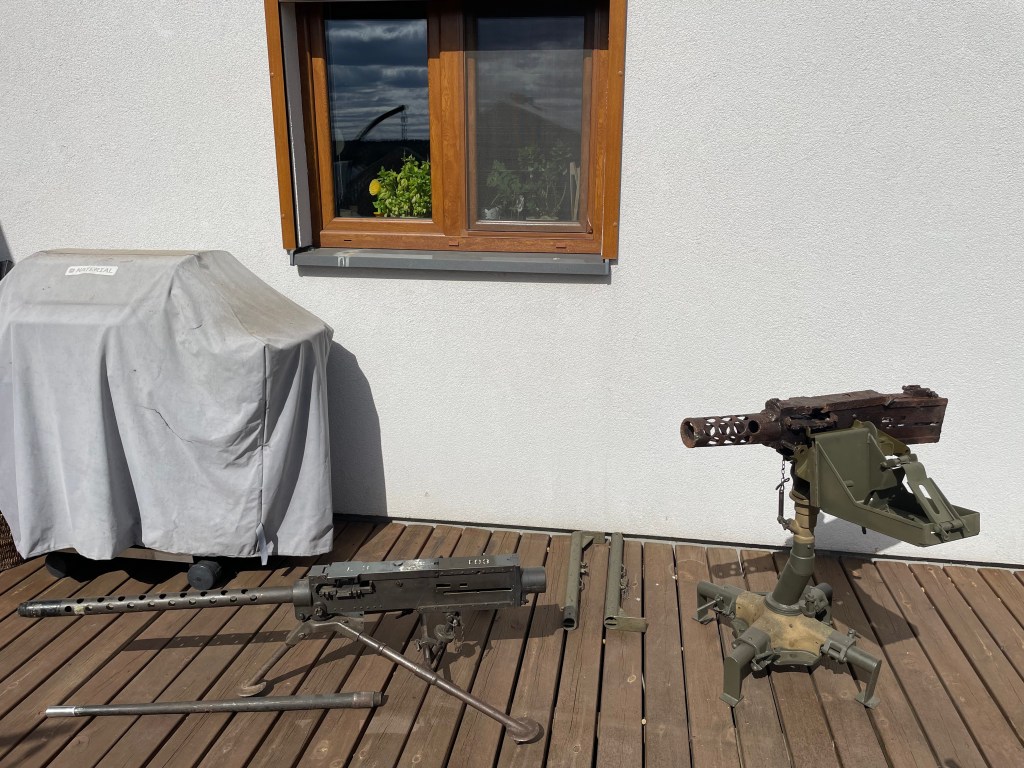
Darek’s verandah showcases a selection of the hardware of the time, and the weapons that may have been used in the war they were fighting. As we arrive, Darek shows us his latest acquisition – in front of the barbecue – a pair of Browning M-2 machine guns. These American weapons are from a tank that was found in Gdansk, and were probably sent to Russia as part of the wartime Lend-Lease agreement.
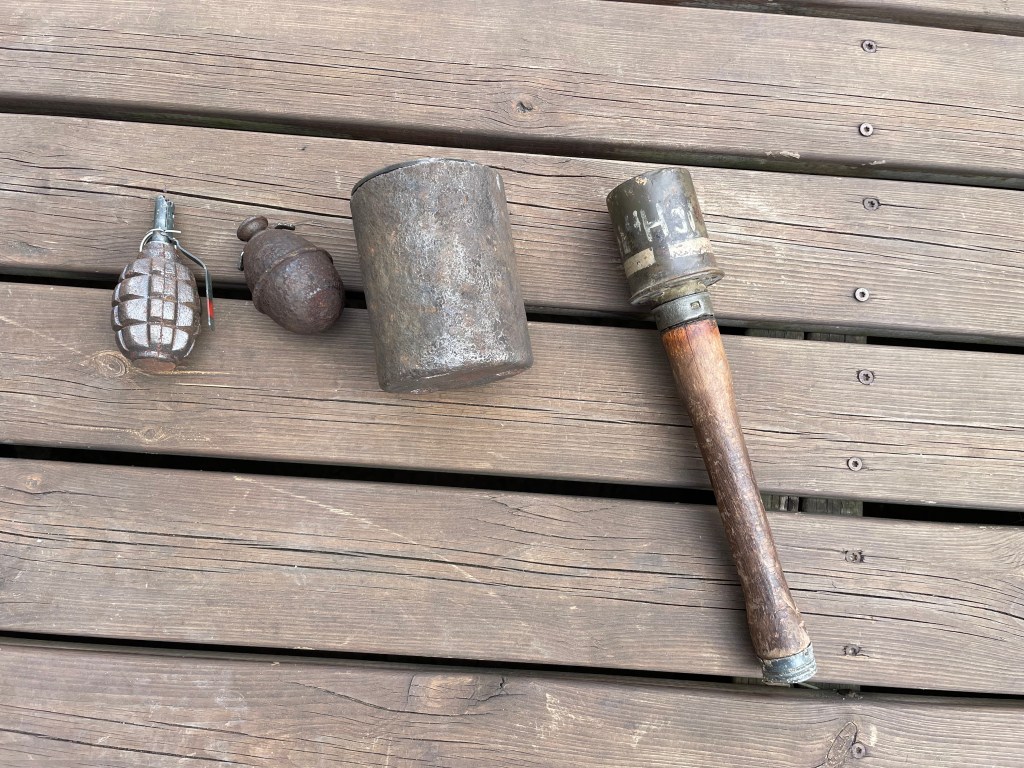
Instead, he shows me his collection of hand grenades. There are some egg-shaped hand-thrown grenades like the British Mills bomb but the longer-range German stick grenade, known as the ‘potato-masher’. catches my eye. I lay the grenades out on the verandah floorboards for a nice photograph along with an S3 anti-personnel mine (third from left) complete with the lethal lead balls, which are kept in a separate plastic bag like a fisherman’s maggots. Everyone with a particular interest in this kind of hardware knows Darek from Wiele, so much so that there’s no need for him to be photographed with his collection. If they want him, they know where to find him.
From a plastic box kept separately from the actual guns Darek produces a collection of bullets, each one stamped ‘SS’ with the date of manufacture – 1938, 1939 and so on. These casings are empty, but the combination of live rounds and Luger took its toll on the population of Europe. Many are still fascinated by this deadly hardware, and Darek has licenses to run his business.
We sit and drink coffee while Darek brings more from his collection – a British Lee Enfield .303, a German MP40 with a fold-down metal stock, a standard issue but now very rare German carbine, once issued en masse to the old men of the civilian Volkssturm militia.
He does, however, draw my attention to a leather holster. He opens it and produces what many British soldiers would have considered a prize trophy – a Luger. He hands it to me, grip first. I take it, and it fits into my hand beautifully. I’ve never held a Luger before but I have read many accounts of what a weapon this was, which was highly sought after by British soldiers coming across German prisoners. This one is harmless, but with the potential to be deadly.
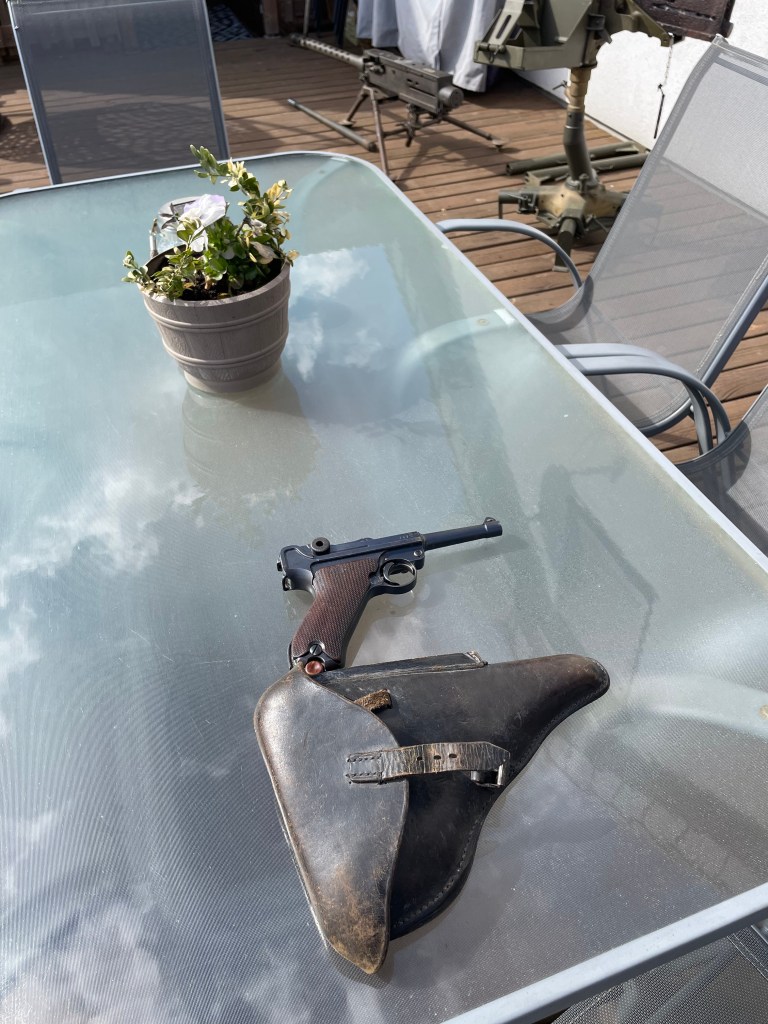
Some of these guns have been found in swamps, some in attics: some have been traded, or swapped for something more desirable. Some already have buyers, and that’s why Darek places the Luger so my photograph doesn’t show the number. It’s a business where one has to be careful, and I need to respect his wishes. I appreciate the insight he is giving me into his world, but boundaries are boundaries and this is not my specialist area.
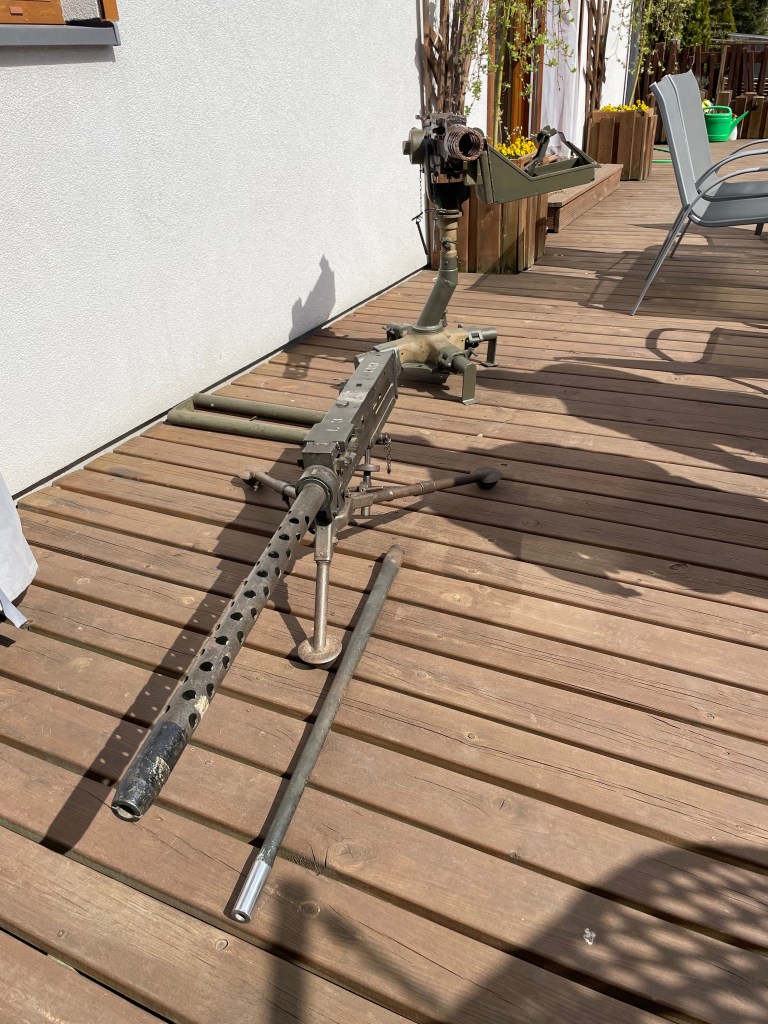
I finish my coffee, take one last look at the machine guns on the patio and go back to my sunny afternoon.
- The author is gathering memories from eyewitnesses to the Seconds World War in Poland for a forthcoming book in his series about the Latvian 15th SS Division in Poland between summer 1944 and May 1945. He would like to thank everyone who is taking part for their advice, time and hospitality.
 Eastern Front Eyewitness