
For decades during the Cold War the airfield at Borsk in Kashubia, Poland, was a Soviet military area, sealed off and with tight security around the perimeter. Everyone assumed the very long runway of 1,600 metres was so their Migs could land safely. But closer inspection by the network of military enthusiasts and collectors in this area has led many to believe that the runway was built by the Germans during the occupation of Poland. As I was passing through the area with experts, they took me there to show me.
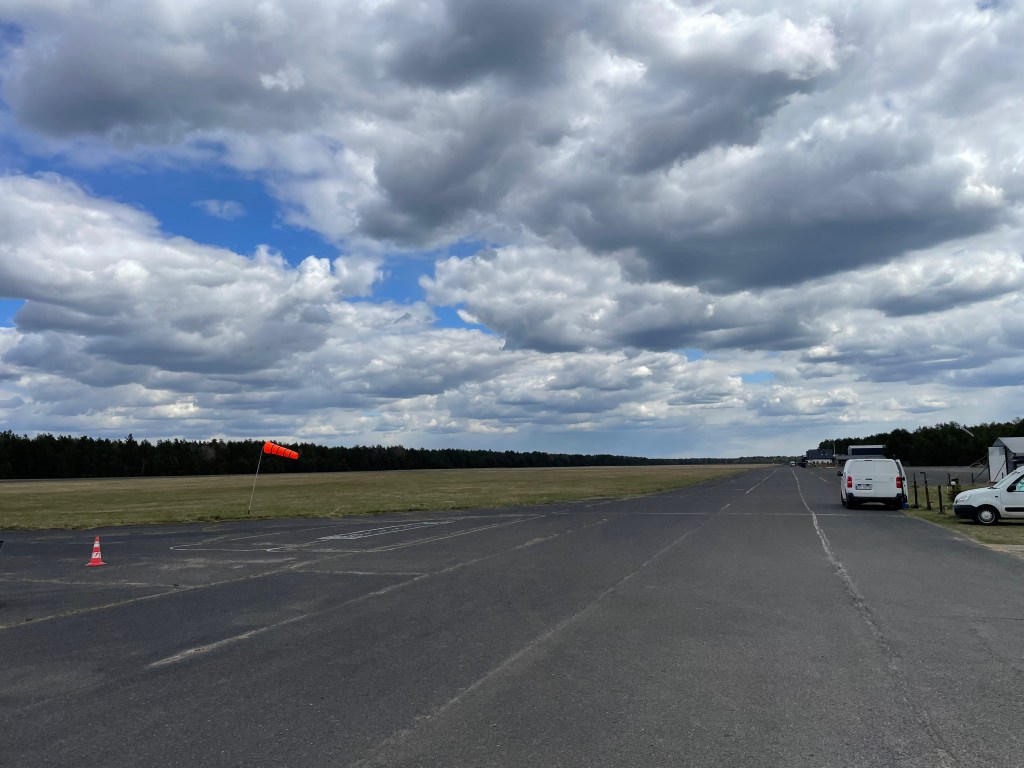
On the face of it, Borsk looks like a standard airfield – very flat, lots of it grassed, perimeter roads for access and of course a windsock. I’ve seen wartime airfields like this in the former East Germany that the Luftwaffe operated with grass runways, operating night fighters and bombers from these surfaces until late in the war. The Soviets took them over and then used them themselves for the next half-century.
What makes the likelihood of Borsk being a wartime German base is what lies in the woods a few hundred metres on the other side of the perimeter road.
“Come. We will show you,” said our guide Jan Delingowski, an avid searcher for bunkers in this picturesque region of hills and lakes that was once an SS training ground known as Der SS-Truppenubungsplatz Westpreussen [the SS West Prussian training ground] around 90 kilometres south-west of Gdansk.
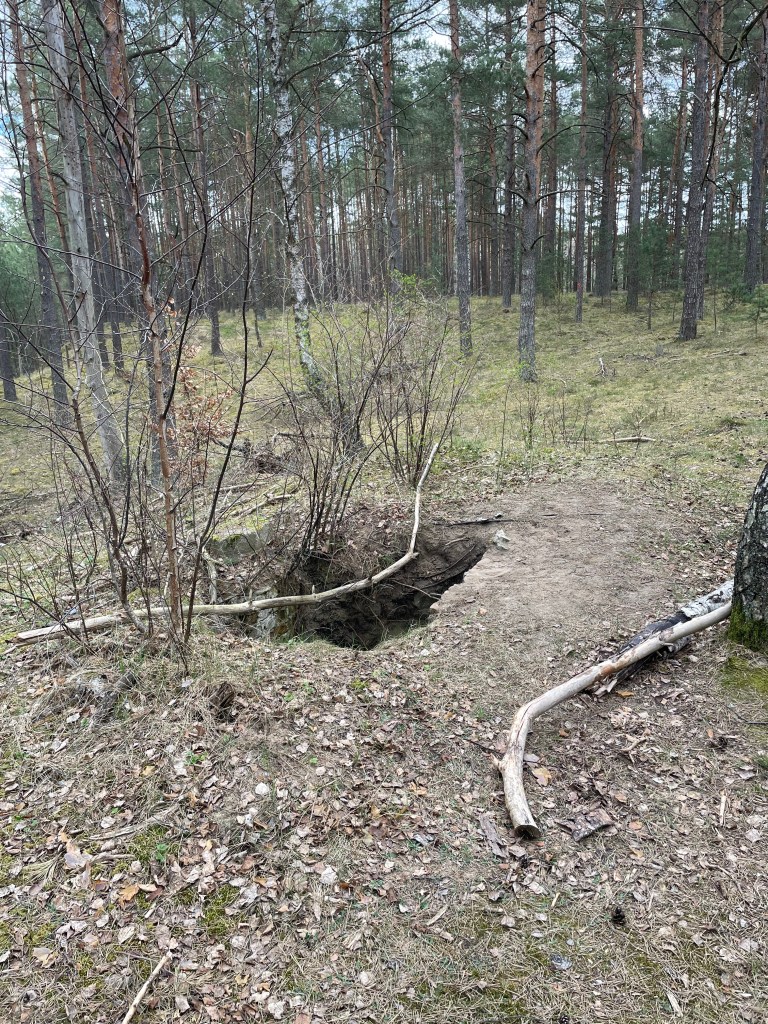
So into the forest we go, expecting to see a ruined and abandoned building, or the rough outline of a trench system. But no. We stop at a hole in the ground, and Jan says: “What are you waiting for? Go down!”
Gingerly I lower myself into the hole, trying to find a firm footing among the bricks, concrete beams and shifting sand underfoot. Torches snap on to light my way as my boots hit solid ground again, and I am suddenly in an underground brick-lined bunker that’s around 25 metres long and about eight metres wide, lined with concrete panels along its length supporting a roof made from concrete poured over corrugated iron (the corrugated iron was subsequently stripped out for its scrap value).
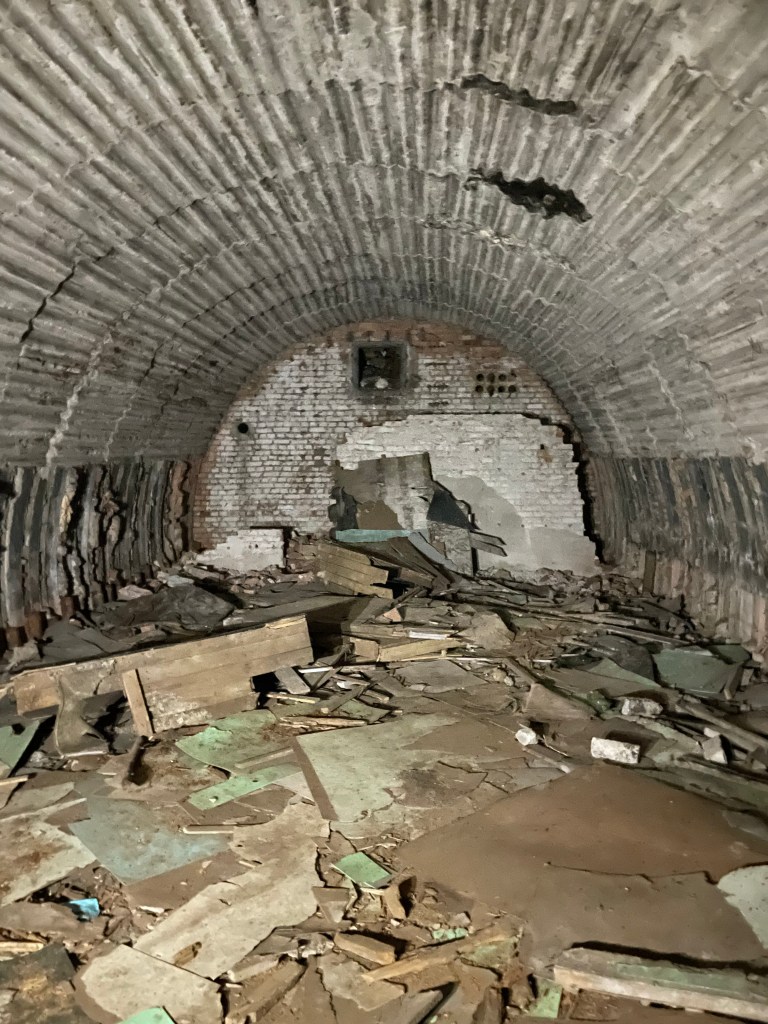
It’s not exactly empty or abandoned, as there is detritus everywhere – fibreboard probably fitted during Soviet times which has been ripped from the walls, bits of wood that may have been shelves or storage boxes, and array of empty bottles left behind by forest drinkers.
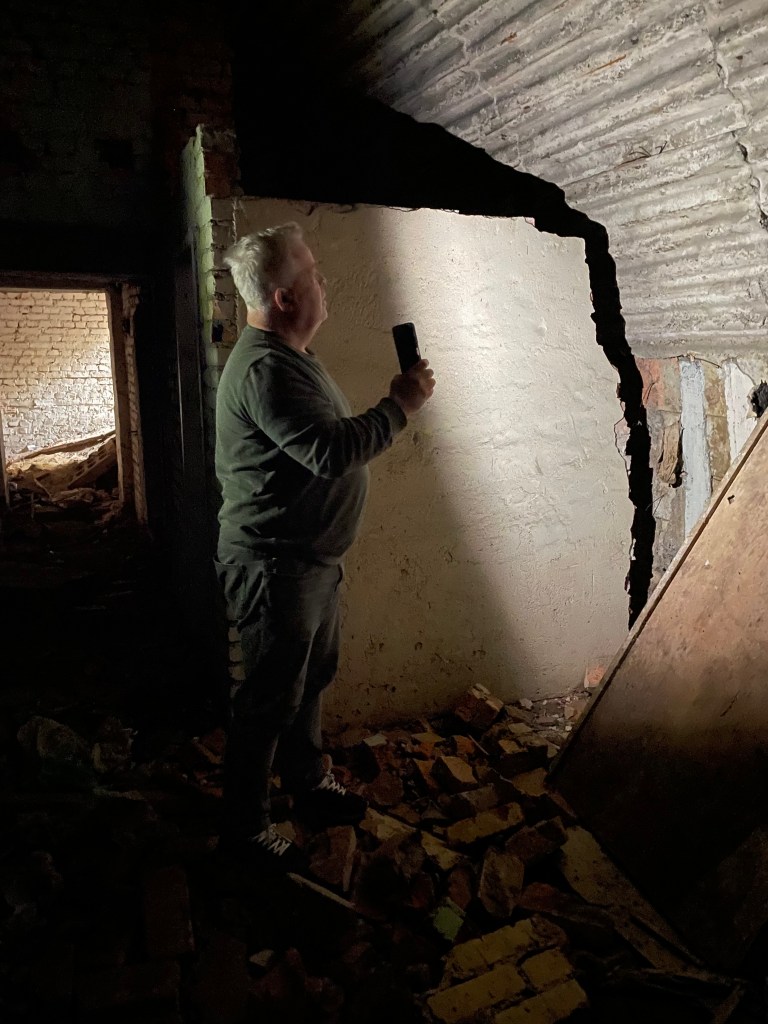
Jan shines his light up and down the side to inspect the construction. He knows a thing or two about bunkers, and this one is a good one. “It’s very strong on the sides, and the roof is attached very well. It’s covered in a mixture of concrete and clay which also lines it. It’s definitely German, not Soviet.”
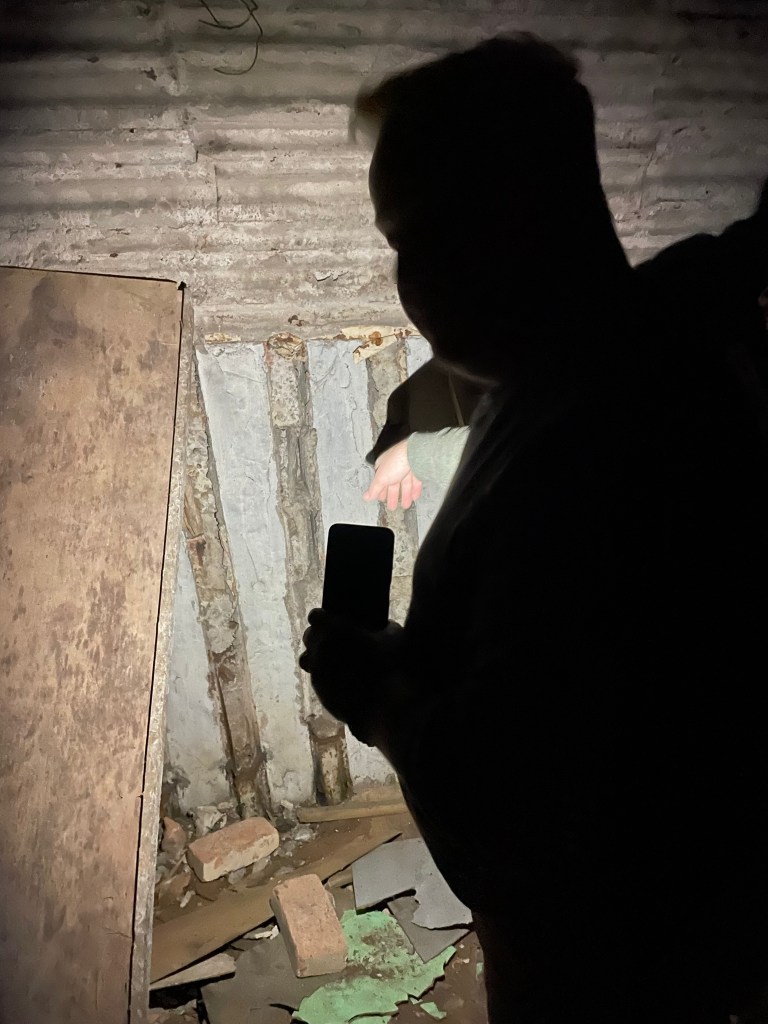
What makes this bunker particularly strong is the row of concrete posts along its length to keep it rigid during possible blasts – in the event of a bombing raid, he says. “So this type of construction makes us think this is something that was done in the German times, and this was used as a place to store bombs – it’s far enough from the runway not to be an explosion risk, it’s underground under a reinforced roof to absorb any blast and the runway is long enough for heavily-laden planes to take off and then there’s a biggest lake in Kashubia ahead, so they can still climb and turn over that. All that makes us believe this was a German airfield.”
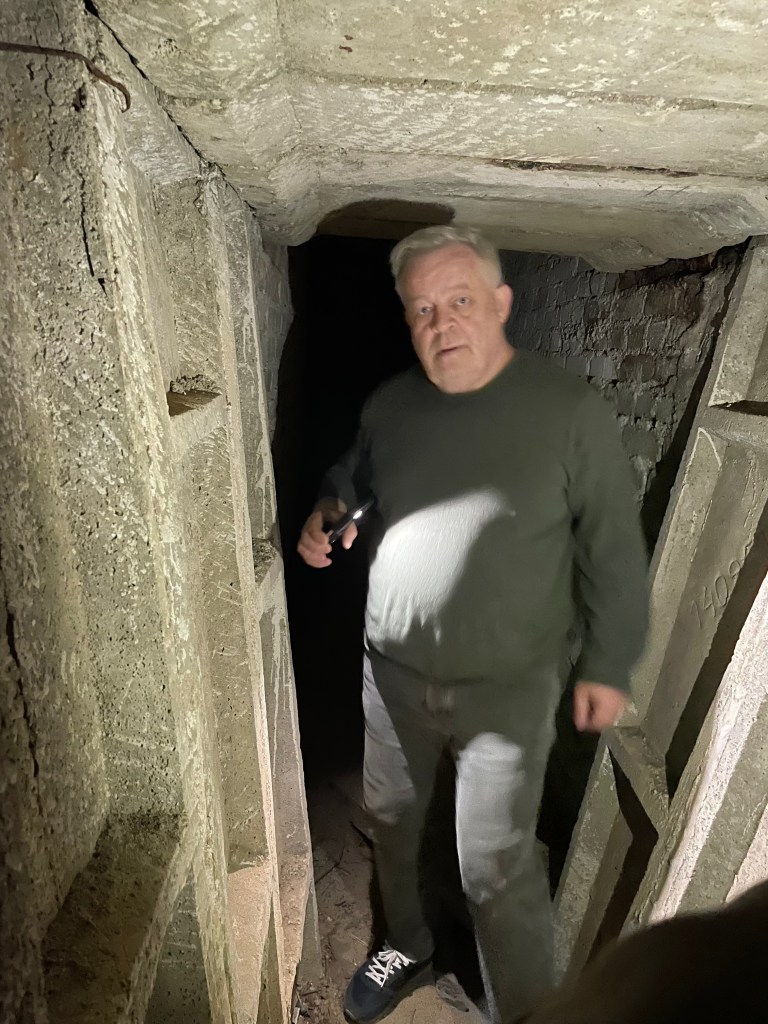
We move out of the main chamber and into a narrow corridor about six metres long which has ventilation shafts and possibly an entrance to another chamber. At one point there are four of us in the corridor and Jan says: “We need to go. The air is not good. Too much CO2.”
To be honest, I hadn’t noticed, but Jan explains that the air has become sweet and that’s a sign of an oxygen drop. We need to get back into the fresh air, so we clamber back up the entrance hole and help each other out.
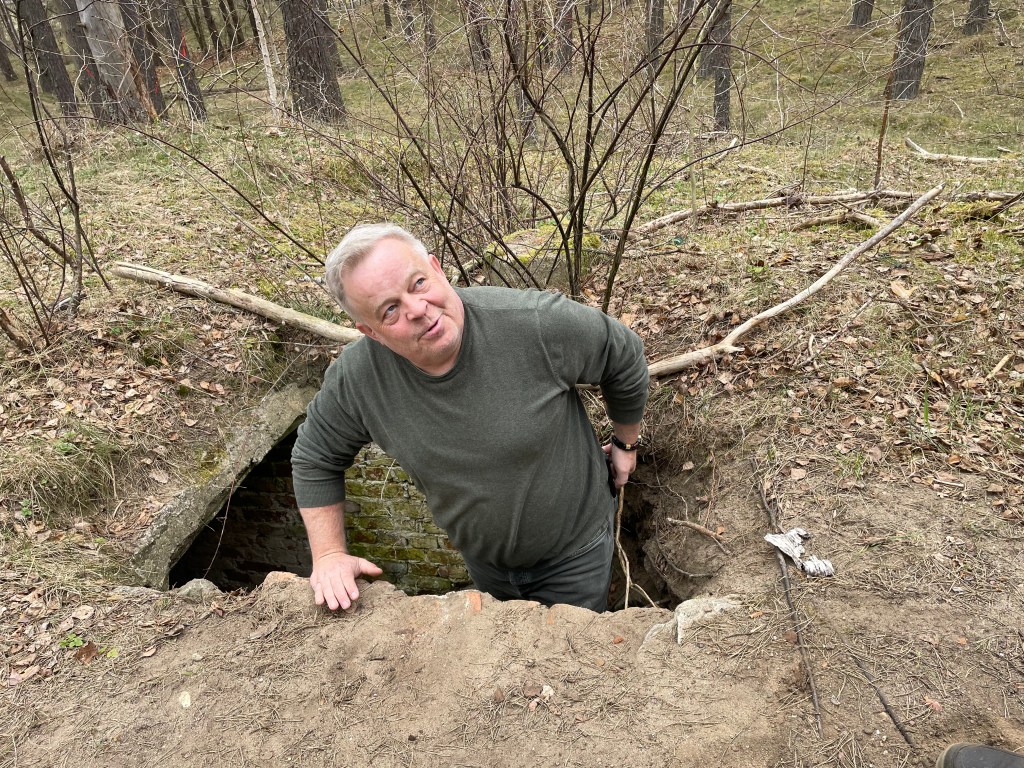
“It’s a beginner’s mistake,” Jan says as he hoists himself out. “Fresh air has about 21 percent oxygen and in bunkers that can drop because the air isn’t circulating. Particularly in the corridor, where the space is restricted and can’t circulate. So we’ve seen what we wanted to see, and the experienced explorer knows when to leave.”
There is a whole network of explorers and ‘hunters’ looking for forgotten bunkers that may contain wartime equipment that may well have a good value on the memorabilia markets. Or they may be empty, and potentially dangerous. Some think that is a risk worth taking, but I would not have gone underground without Jan telling me it was safe.
His explorations though, with the experience and knowledge of the network of people he talks to before, during and after a visit like this, are changing the way Kashubians think about what happened here during the war.
- The author is in Poland gathering material for a forthcoming book about the Latvian 15th SS Division in Pomerania between summer 1944 and May 1945. He would like to thank all the Polish historians and history activists for their help, expertise and hospitality.

