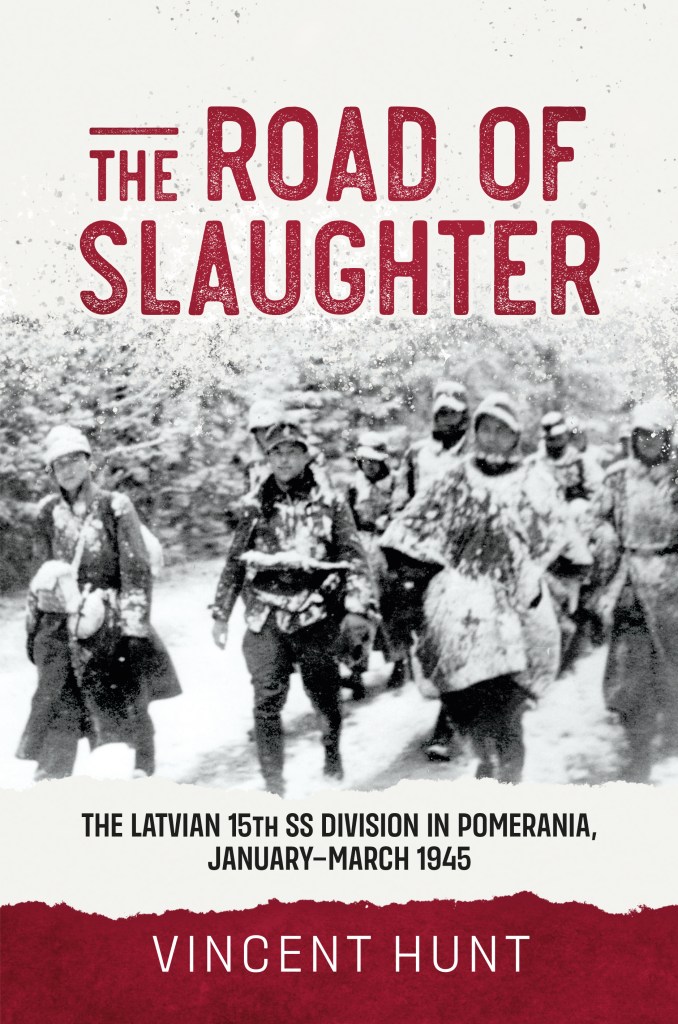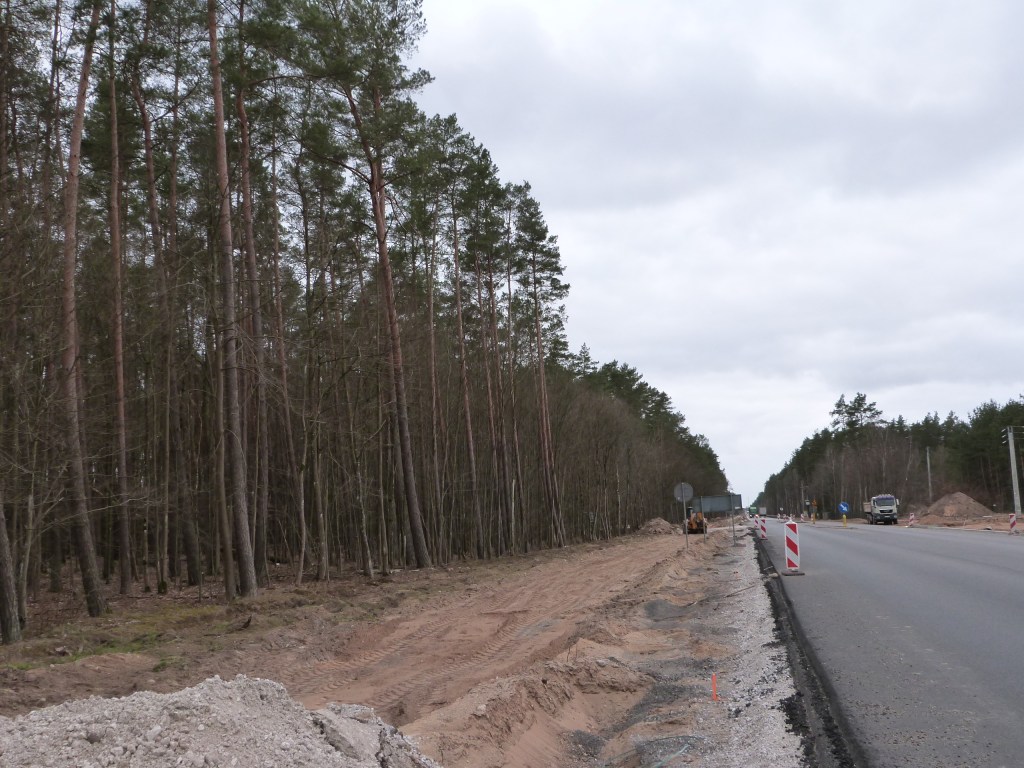
It was the creation of a cycle track along Route 22 in Złotów County, north-central Poland that drew me back to the Road of Slaughter eight years after my first visit. This time I was with two experts on what happened in late January and early February 1945 rather than piecing together events and locations from the eyewitness accounts of veterans I interviewed 70+ years later.
The Latvian 15th SS Division was encircled here by the Red Army with huge loss of life along the road between Jastrow and Landeck (now Jastrowie and Ledyczek). Moving with them were columns of refugees who also took terrible casualties. Up to 5,000 Latvians may have died here as they fought off Russian and Polish attacks on the road and the village of Flederborn (now Podgaje). They finally broke out after an all-out assault on a roadblock at the Landeck end, having overcome a machine gun position and snipers in the trees.
I was in Pomerania with Aivars Sinka, chairman of the Latvian Legion veterans’ association Daugavas Vanagi for a closer look at Latvian camps near Torun. We’d been invited by Jan Baranowski, the chairman of the Pomeranian Historical Association and his colleague Piotr Czerepuk; a teacher, archivist and leader of the ‘Czata 49’ youth re-enactment group. Both Jan and Piotr are expert ‘diggers’ and have many years of experience exploring former battle sites.
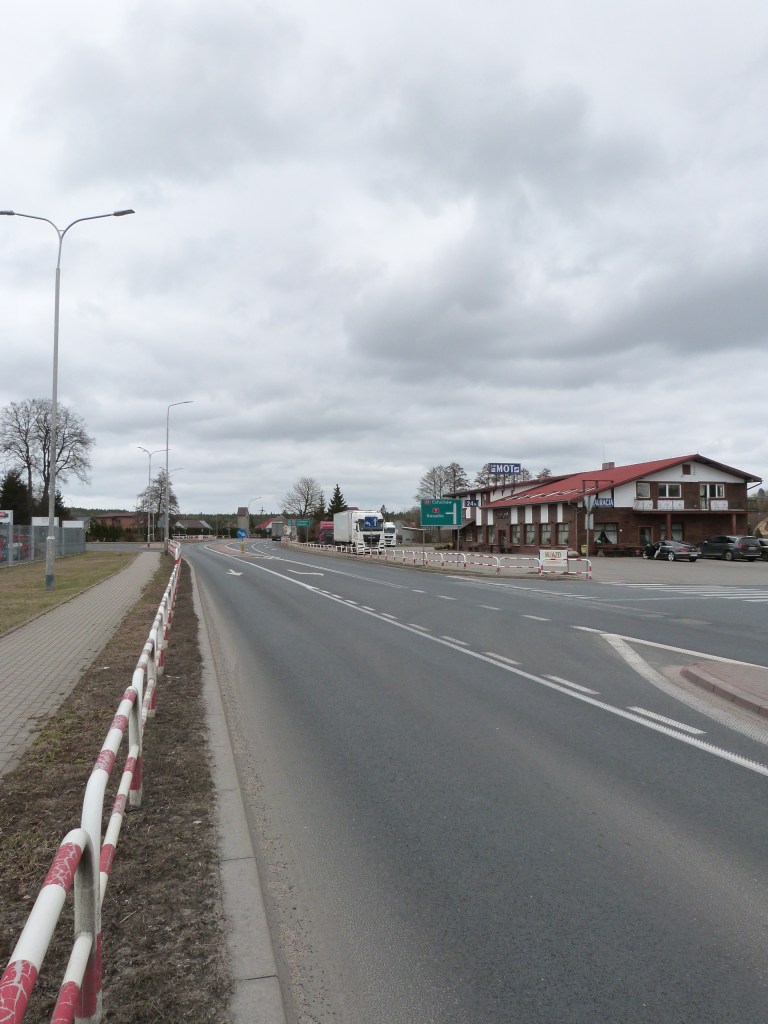
Route 22 is now a fast road with almost-constant HGV traffic but the features that made it the Road of Slaughter can be witnessed to sobering effect from the cycle lane. From the heights at Wallachsee (Chwalimie) machine gun fire, katyusha rockets and artillery shells rained down on the soldiers and civilians trapped on the open road. According to local accounts, there were so many killed here that the bodies were still being cleared away in 1947.
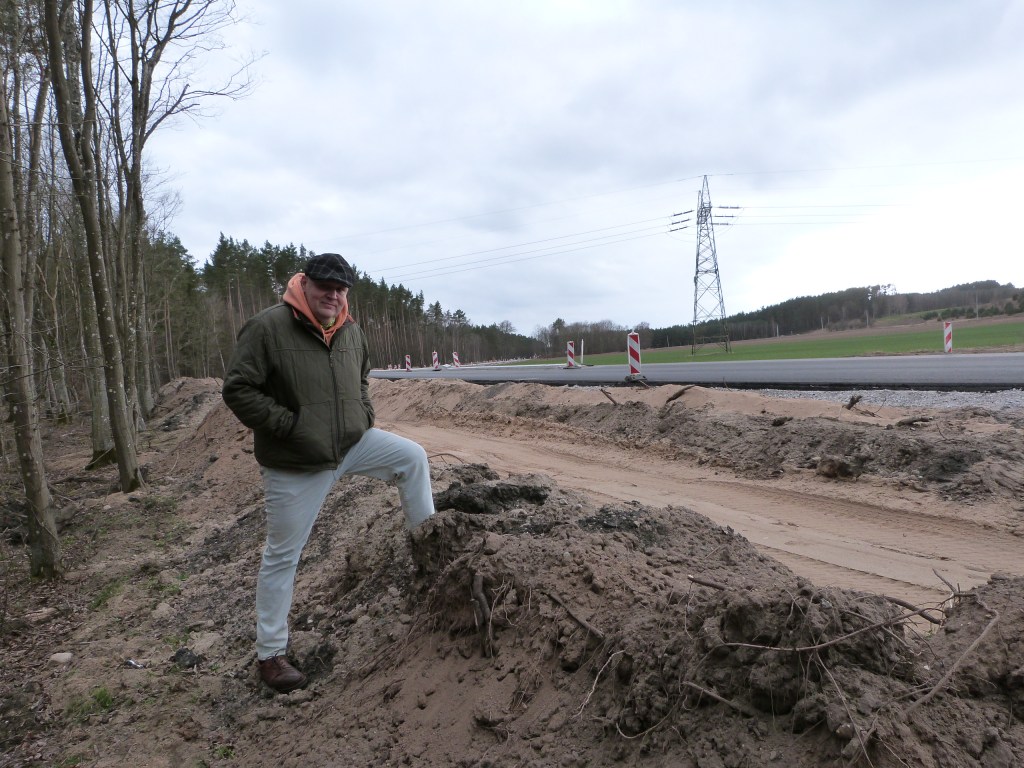
The work for the cycle lane has revealed some discoveries that shed light on what happened here. Jan and Piotr tell us that 20 years ago a mass grave of around 100–200 Latvian teenage conscripts in a labour battalion [RAD, or Reichsarbeitsdienst) were found here. The story goes that they were all laid in a line, and may have been executed by the side of the road. Will these fresh excavations reveal more?
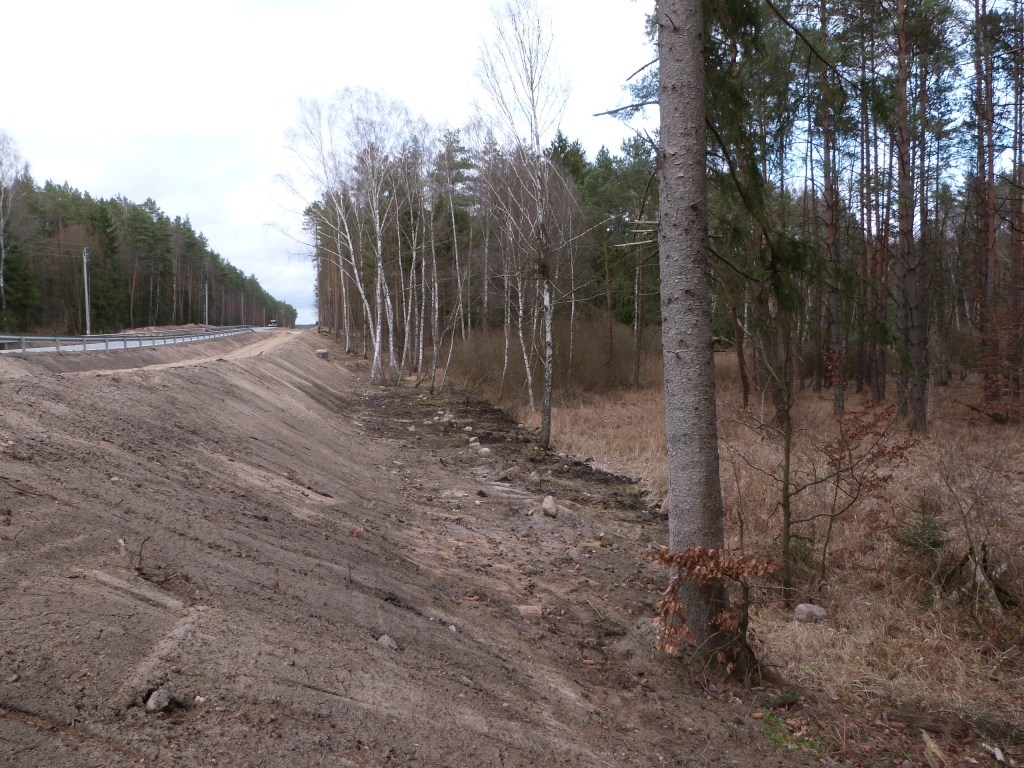
The construction work has cleared a distance of around 10 metres into the forest, and here Piotr wanted to show us where he found what he thinks is the cap badge of Julijs Straume, the 15th Division’s Lutheran chaplain who was killed on the road.
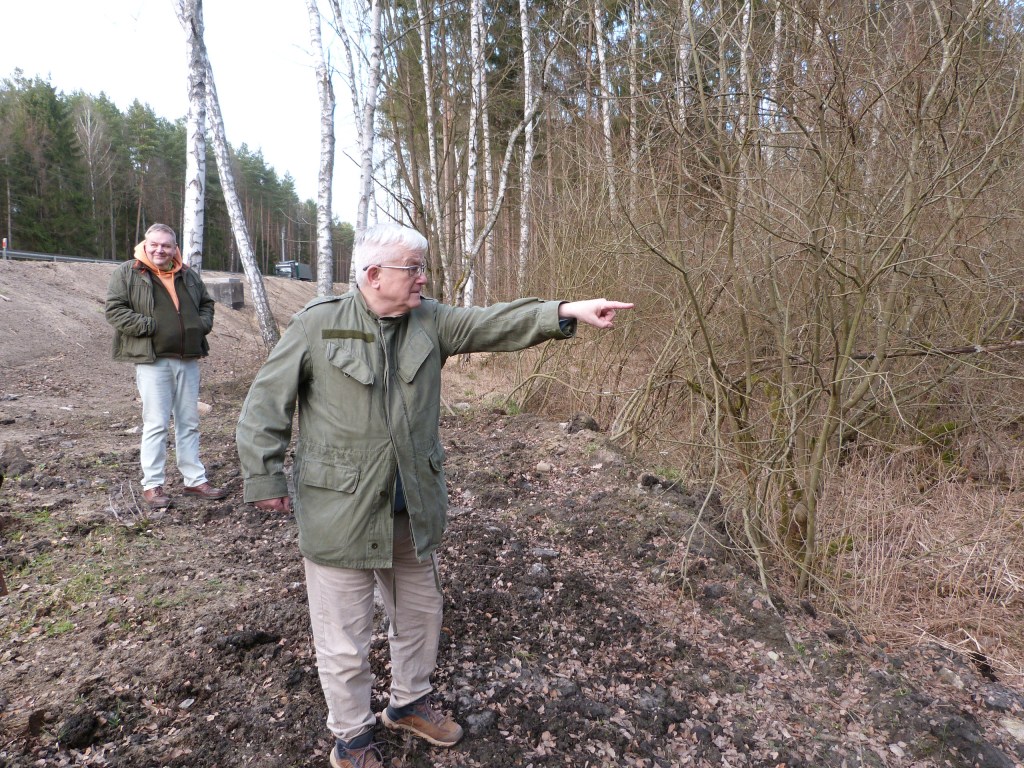
The roadworks mean the landmarks he recognised then have changed a little, but after a while he found the spot. Straume certainly died in this area, as his Catholic colleague Kazimirs Rucs saw him fall.
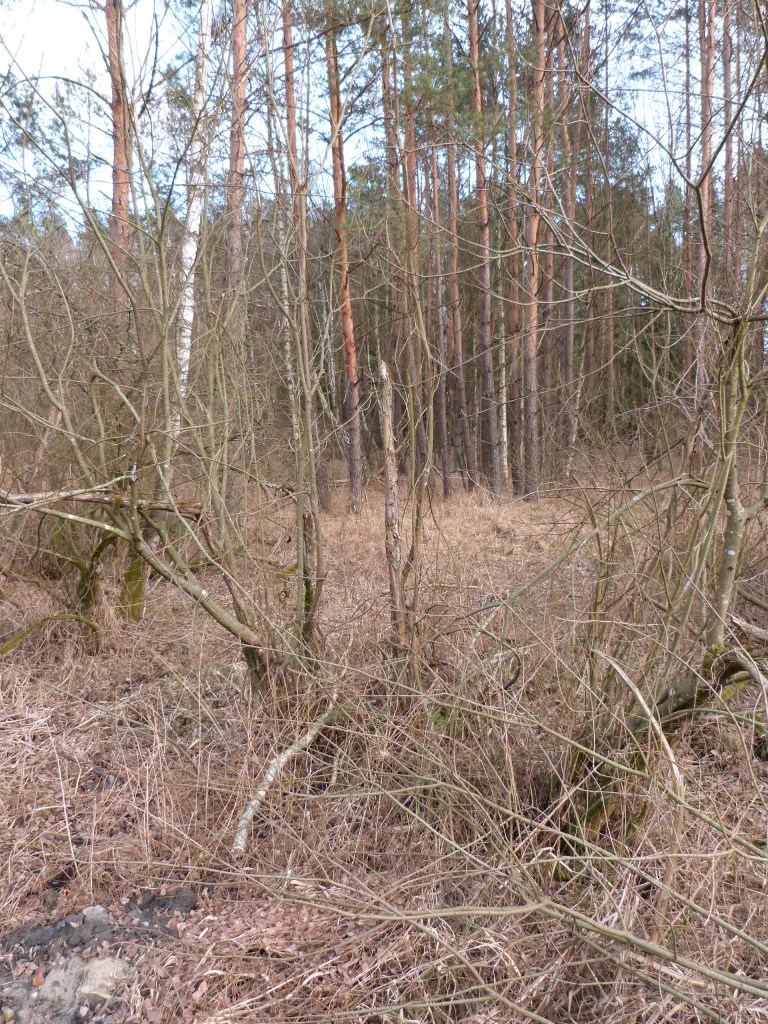
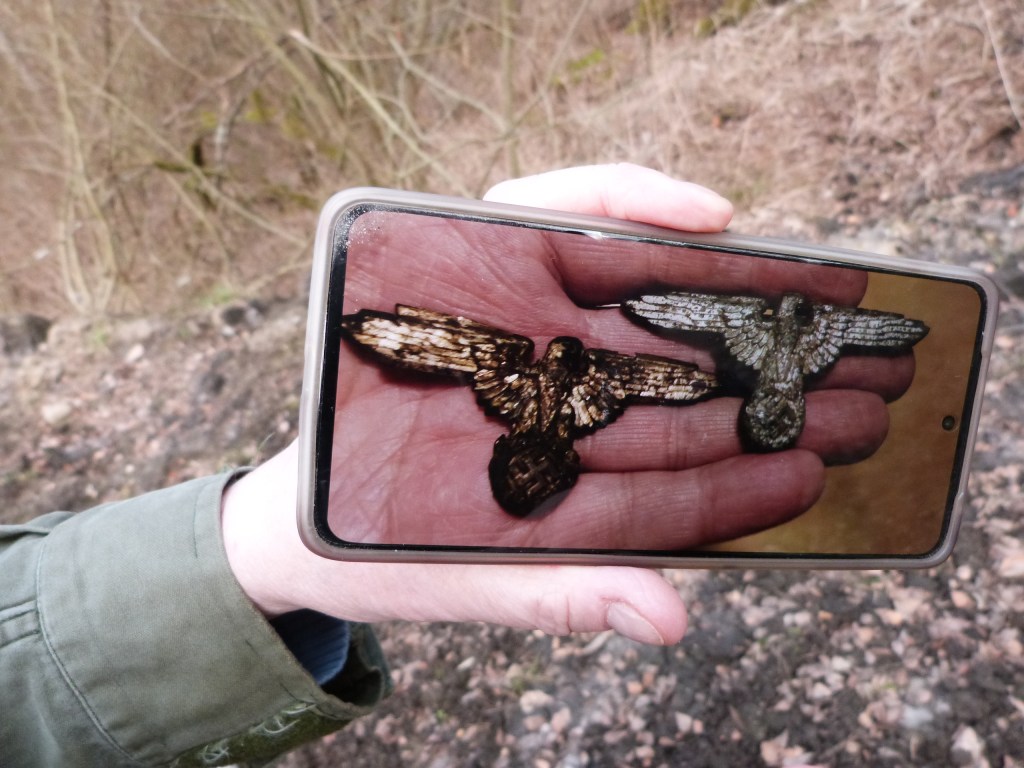
Piotr found the badge in bushes set back from the road: whether this is the exact spot, and whether this was his cap badge, is yet to be determined definitively but something happened to someone here, who left a golden eagle badge behind (left). The German version is on the right for comparison.
We spent half an hour crunching across the fallen branches in the forest, with Jan’s expert eye seeking out anything of interest in the spoil from the cycle lane work: some German uniform buttons, a horse’s hip bone, some metal plates. Jan and Piotr get talking to the road crew, and they show us what they have found in the past few days. Before long, Aivars has a distinctive piece of circular metal in his hand.
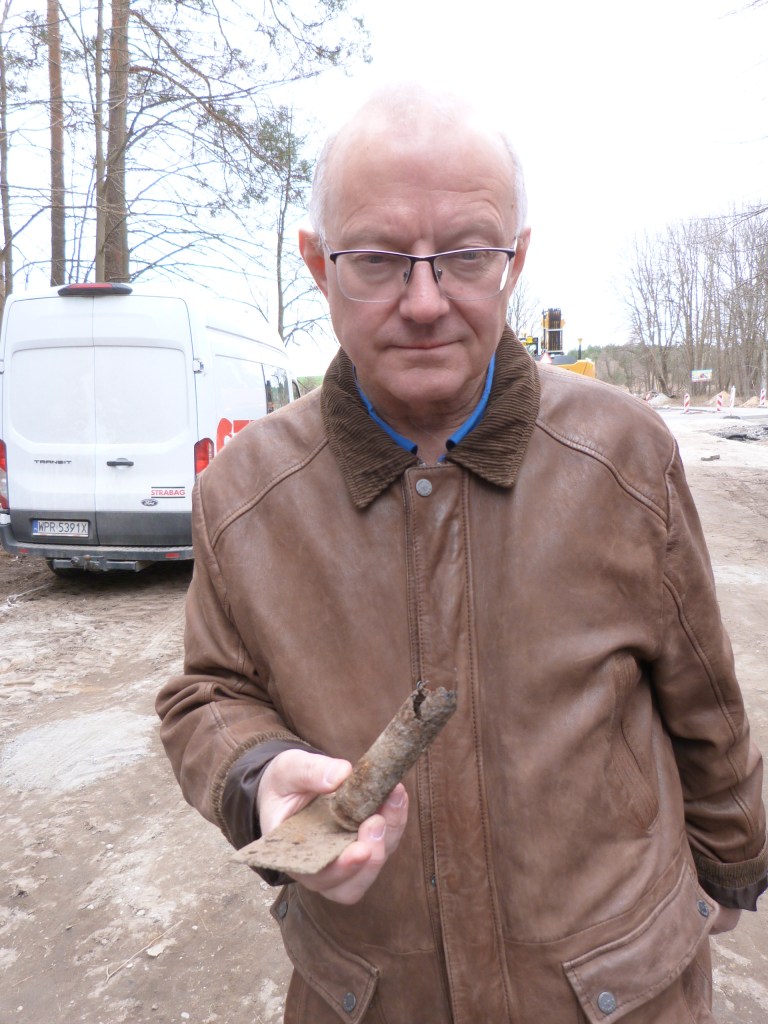
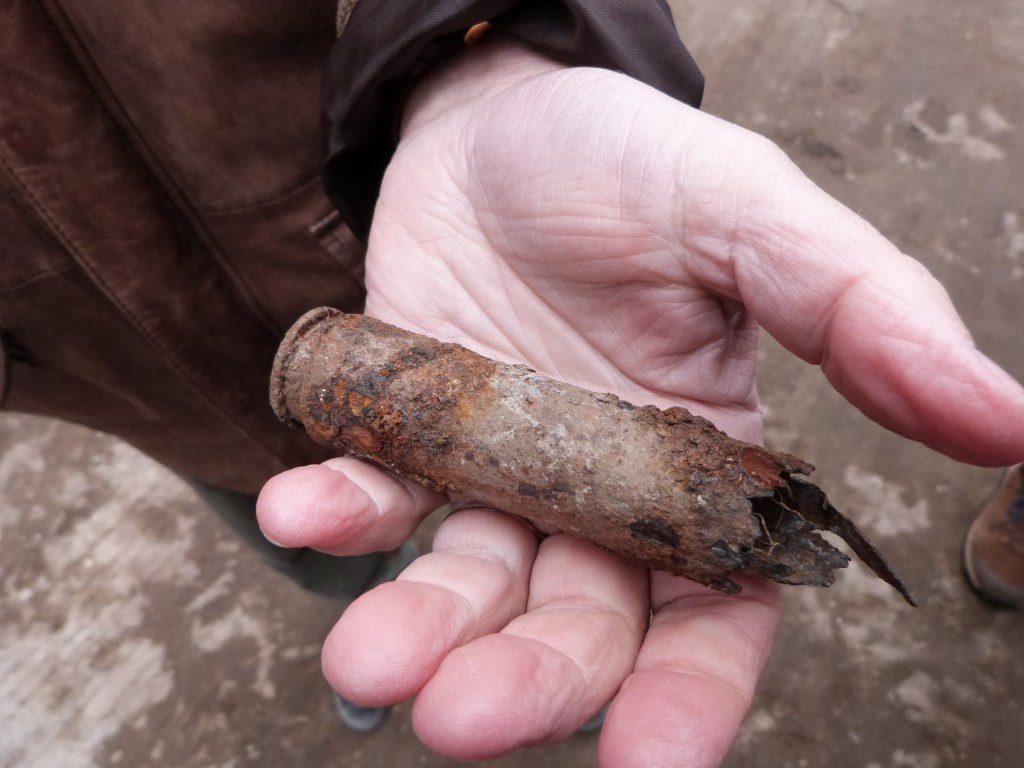
It’s a spent shell casing from a 2cm anti-aircraft (flak) gun. This would have been returning fire from Latvian positions in the forest as the 15th Division tried to regroup amid the chaos.
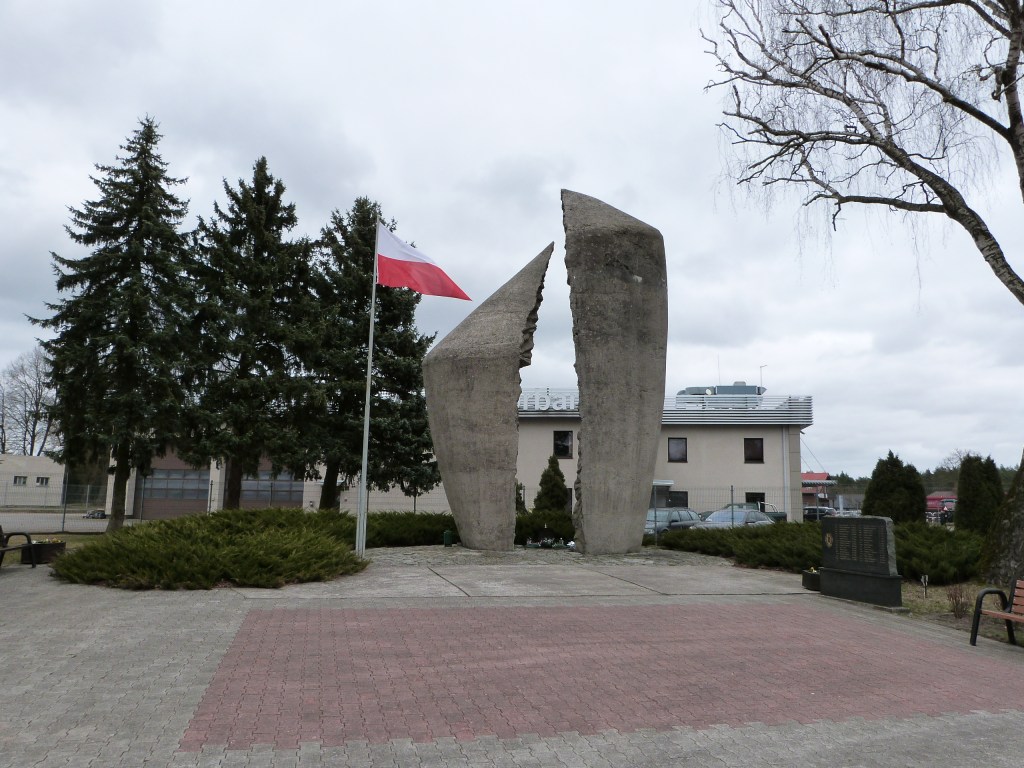
We stopped to pay our respects at the monument in Podgaje-Flederborn to 32 Polish soldiers massacred in a barn towards the end of the fighting. The Latvians have been blamed for this ever since, but the accounts of sons of Legionnaires that surfaced after The Road of Slaughter was published point to the garrison unit of the 48th Dutch SS General Seyffardt as being most likely.
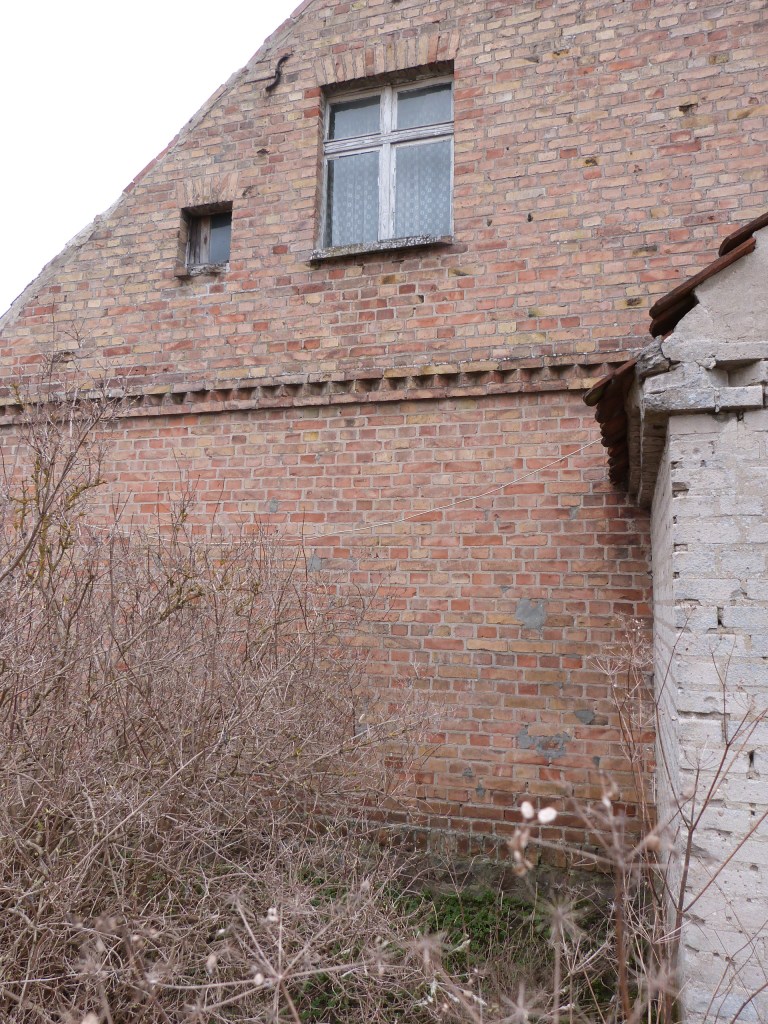
This was an area of barns 80 years, and most have been converted into bungalows. Some that have not been improved still bear what could be the scars of the intense Soviet shelling that led to its capture on 3 February 1945.
A Soviet machine gun blocked any escape from the deadly fire at the Landeck end of the road. The Latvian soldiers sheltered in the forests as their German commanders formulated a plan. In the end, this was a ‘death or glory’ all-out assault which was successful but cost the lives of many of the senior officers.
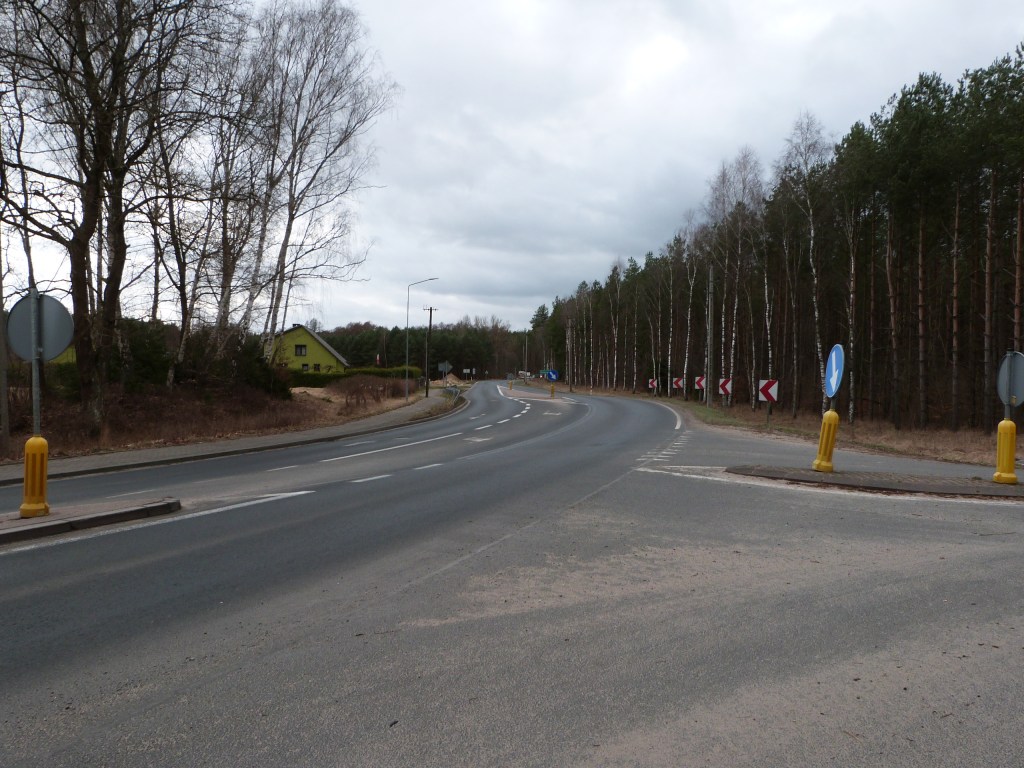
Crossing this bridge meant the encirclement had been broken, by a combination of the 15th Division’s frontal charge and a second, German unit pushing the Russians out of the village and onto the far side of the bridge, where they could be ground down between the two forces.
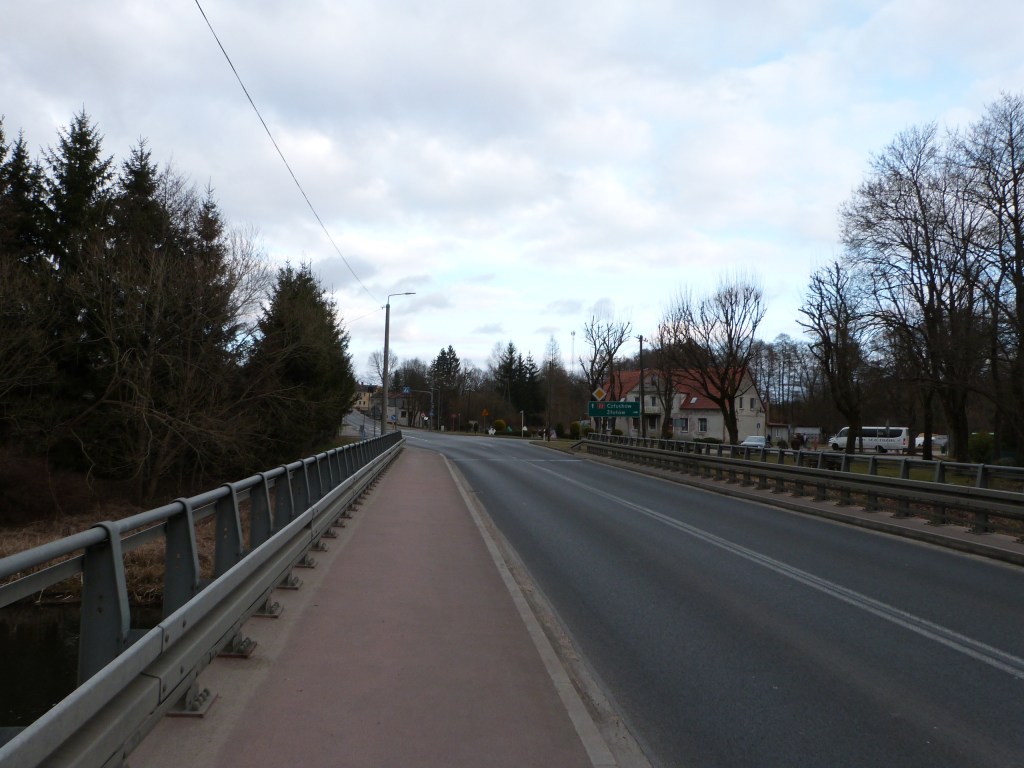
Returning to the Road of Slaughter with two Polish experts cast a new focus on how murderous being caught in that encirclement must have been, but also on individual human catastrophes that we know about, but have yet to find firm evidence of.
There is the story of 400 teenage conscripts who panicked under fire and ran, only to be captured by a Soviet tank crew, held in barns overnight and then murdered in groups of 50-100 at a time in the forest. Where could they be?
Or the 600 Labour Battalion boys apparently executed with ‘neck shots’ at a barracks in Ledyczek. We are still no nearer solving that mystery. Are there mass graves under the canopy of trees, and will the pending re-surfacing of Route 22 reveal more secrets about those tragic events 81 years ago? The work on the road means new discoveries are being made every day: as this article was being written, construction teams discovered what was left of a Mauser 98 rifle, standard issue for German units at the time.